Student-made homes built to industry standards coming to market
In Brief:
- Two relocatable student-built homes – a one-bedroom and two-bedroom dwelling – will be available to the public for purchase on Saturday, 21 November 2026.
- Level 3 Carpentry students at Mt Albert Campus build between 4-8 fully consented homes a year from the ground up, gaining hands-on experience across framing, roofing, cladding and the building inspection process.
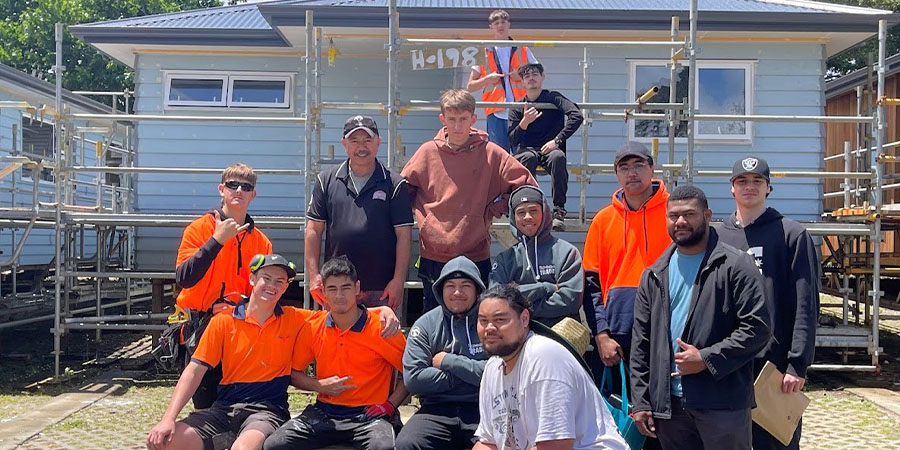
The noise of hammers, saws and power tools behind Gate 4 at our Mt Albert Campus is the next generation of carpenters and builders learning their trade by building fully consented homes from the ground up.
Two of the latest student-built homes – a one bedroom and a two-bedroom dwelling – will be offered for sale to the public at an Open Home on Saturday, 21 November 2026.
The Open Home will give prospective homeowners the opportunity to see first-hand the quality of work produced by our Level 3 Carpentry ākonga ‘learners’ in the New Zealand Certificate in Construction Trade Skills – Carpentry.
Both houses are under 70sqm in size and are relocatable, meaning they are constructed at Mt Albert campus before being transported to a buyer’s site. A larger 114sqm dwelling is also currently available.
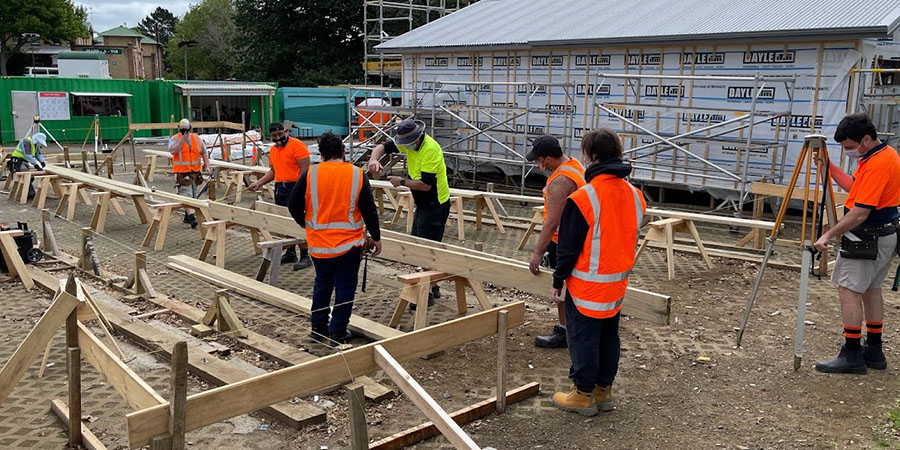
Carpentry students working on a house project supervised by their tutors.
Senior Lecturer and House Projects coordinator Joey Pitovao says the housing projects are a major part of the students’ practical training, and they are involved in the build throughout the construction process, putting ‘classroom learning’ into practice.
“Our carpentry students build between four to eight houses every year. Over the past ten years, we’ve built over 50 houses. We are at house number 218,” he explains.
Each house takes around eight months to complete.
The programme begins in February with four weeks focused on health and safety, tool inductions, an introductory project and site set-out before students move into the house build from April through to November.
“Students are one hundred percent building the houses for the carpentry component,” Joey says. “Tutors supervise and teach.”
Specialist licensed tradespeople complete work such as electrical, plumbing and roofing services, giving students the opportunity to work alongside the wider construction industry while focusing on their own carpentry skills.
The projects are deliberately structured to provide students with substantial hands-on experience.
“We have one class working on each house which is around thirty students to an average 115sqm house, or two smaller houses to the same sqm to try and keep the students engaged and have enough building experience,” Mr Pitovao says.
What sets the homes apart is that they are constructed under a full building consent, with Auckland Council inspections taking place at different stages of the build. That means students experience the same inspection and compliance processes they will encounter when they move into the construction industry.
For potential homeowners, it also gives them peace of mind that the construction has been inspected and signed off through the consent process.
The smaller homes occupy a similar size category to a minor dwelling or granny flat, but buyers will need to arrange their own site, foundations, services, transportation and any consents or approvals required at their property.
The homes can be purchased as a turnkey finished house, including interior paint, carpet and kitchen, or as a clean canvas finish, giving buyers greater flexibility to complete the interior themselves.
Both homes come with black aluminium joinery, a mono-pitch roof and a mix of vertical weatherboard cladding.
For our future carpentry learners, the house projects demonstrate the scale and authenticity of the training available through the programme. Rather than working on small training exercises, students can see a project develop from site set-out through to completion.
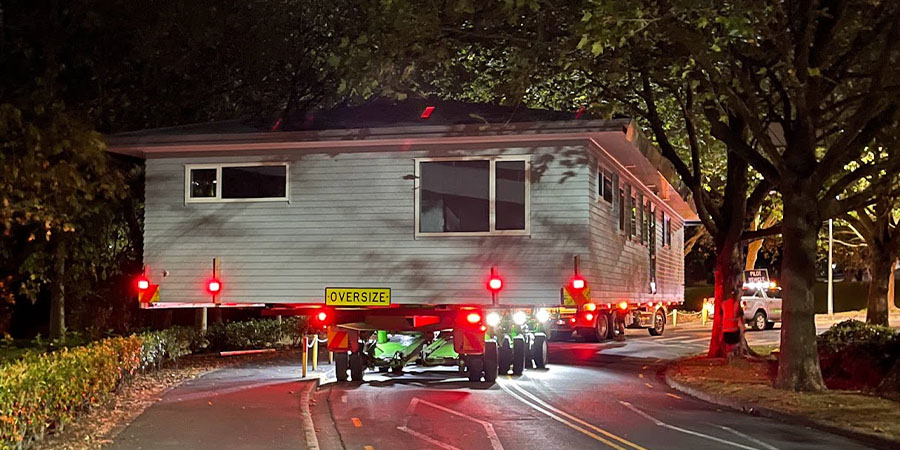
A completed home leaving Gate 4 being relocated to the new owner’s site.
“It takes about eight months to build a house. From April to November, they are building the house project,” Joey says.
Our students also develop an understanding of how different trades and professionals contribute to a construction project – an important part of preparing them for employment in the building industry.
The Carpentry programme has been doing it at scale. Joey says the programme has reached house number 218, with the number built each year varying according to available space and the programme structure.
Each house represents hundreds of hours of practical learning by our ākonga preparing them for careers in one of Aotearoa New Zealand’s most important industries.
The completed homes are then sold, with the funding recycled into future house-building projects and student training.
The approximate market value of the finished homes ranges from $250,000 to $380,000, depending on the dwelling.
Following the Open homes in November, the houses need to leave campus by the end of February 2027 to make room for the next student cohort and its new builds.
People interested in attending the Open Home on Saturday, 21 November from 10-11am can register here.
For more information email housesforsale@unitec.ac.nz
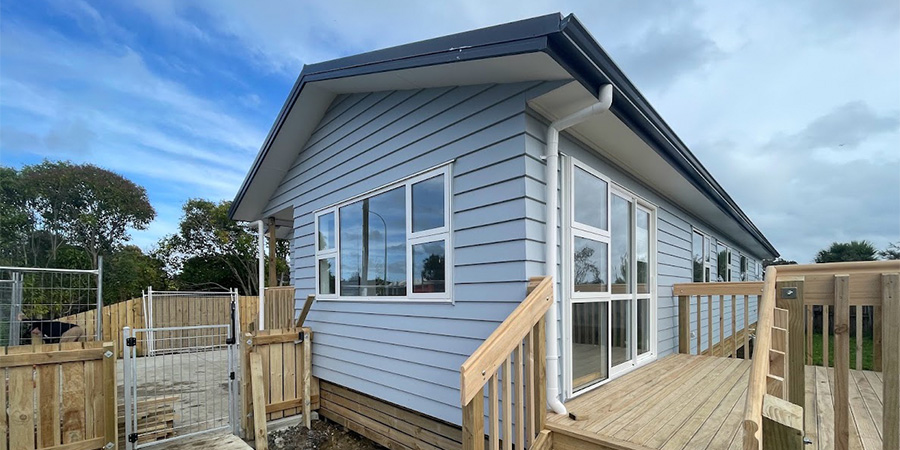
One of the student-built houses sold to Kainga Ora finds a new home in Papakura.


