Students share their research alongside thought leaders at Environmental & Animal Sciences Symposium
In Brief:
- School of Environmental & Animal Sciences’ annual symposium saw student and early career researchers presenting their work alongside established voices in animal behaviour, welfare, biodiversity, ecology and conservation.
- It was the third and largest symposium run by the school, attracting representation from five different educational institutions and fourteen different industry stakeholders.
- The event provides a supportive environment for learners to gain insights and inspiration from those at varying stages of their careers while networking with fellow researchers and industry contacts.
Whether the Laughing Kookaburra could establish itself as a pest on this side of the Tasman, the welfare of North Island Brown Kiwi in captivity across the world and the search for the perfect cat litter were all covered at the symposium at Owairaka | Mt Albert Campus on Friday 6 October, 2026.
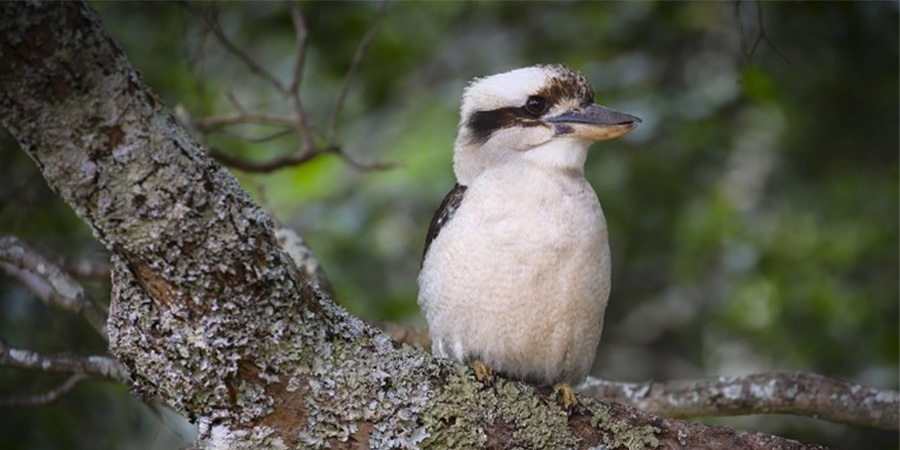
Animal Behaviour & Welfare and Biodiversity Management student Emma Brockes presented a research poster looking at factors likely to increase the chances of a quintessentially Australian bird becoming invasive in New Zealand.
The Laughing Kookaburra was introduced on Kawau Island in the Hauraki Gulf in the 1860s by Governor Sir George Grey.
Further efforts were made to establish a population on the mainland in Otago from 1866-1869, Nelson in 1867, Auckland in 1868 and Wellington in 1876.
“Many such attempts failed, but the Kawau Island population took root and spread.
They are now found in many sites, across Auckland and Northland,” Emma says.
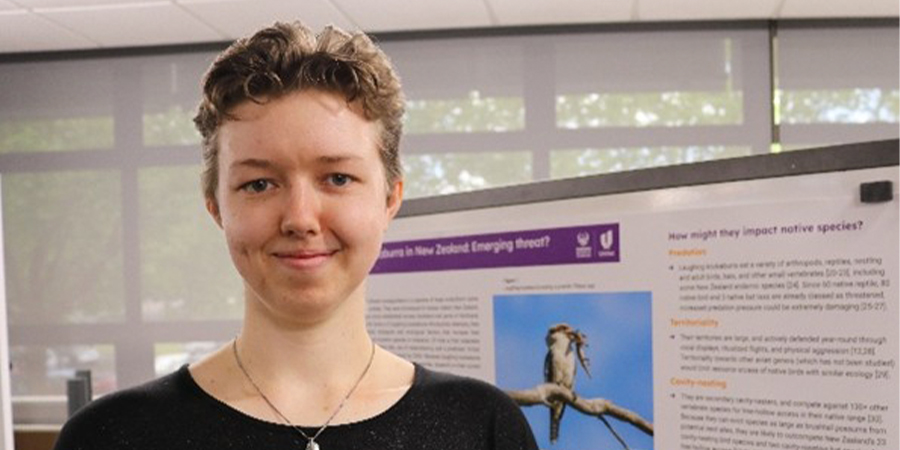
Student Emma Brockes’ poster looked at the chances of Laughing Kookaburra populations increasing to invasive levels across the country.
The study identified climate change as a key factor increasing the likelihood the species could become established, estimating at its current rate, global warming will raise habitat suitability for kookaburra in this country 1434% by the year 2050.
“There are few species here (in New Zealand) that are capable of predating a flock of laughing kookaburra. They have a large body mass and brain size, both of which are advantageous in foreign environments. They also have a highly adaptive reproductive strategy,” says Emma Brockes.
The symposium provides a forum to share what our learners are working on, while connecting them with their colleagues and experts in the fields they are studying to enter.
“Research can sometimes feel intimidating when you’re just starting out, but today’s programme demonstrates that everyone has something valuable to contribute,” MIT and Unitec’s Director of Research & Enterprise, Dr Rosanne Ellis told the audience in her welcome address.
“We are proud to support applied research that creates impact beyond our institutions. We know that the best research often happens when different perspectives come together, and when strong partnerships exist between education, industry, communities, and government.
“Events like this help build those connections and create opportunities for future collaboration,” Dr Ellis says.
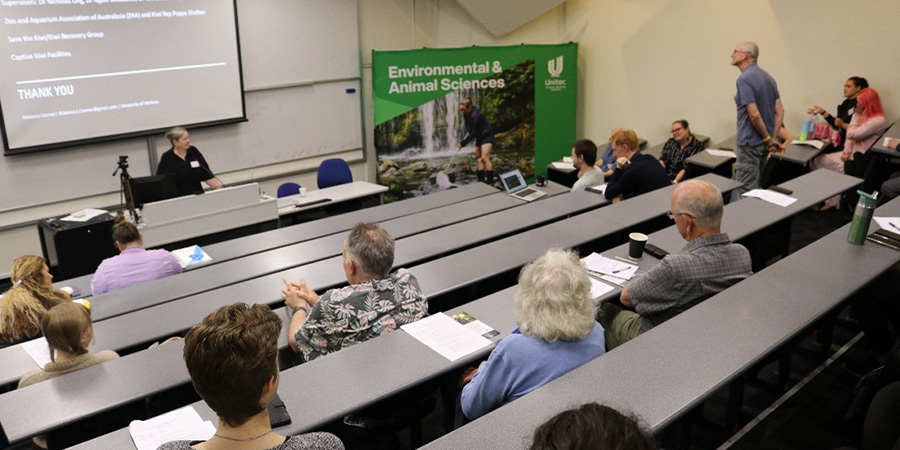
Rebecca Connor answering questions about her study of North Island Brown Kiwi housed in captivity both here and internationally.
Former School of Environmental & Animals Sciences student turned lecturer and now-University of Waikato doctoral candidate Rebecca Connor presented her global survey of the housing and welfare of North Island Brown Kiwi in captivity.
The survey returned data on 137 birds, representing 93.3% of the captive population in NZ and 83.3% of those housed internationally.
‘Captive kiwi in this country are fed ‘the Massey diet’ which best replicates the nutritional balance between meat (54%) and fruit & vegetables (33%) the birds consume in the wild,” Rebecca says.
However, it was found the diets of kiwi housed overseas were composed of meat varying between 27 to 83 percent and fruit & vegetables from 17 to 58 percent. In some cases, this leads to obesity.
International enclosures tended to be smaller, with health issues reported in 39% of captive kiwi and behavioural problems in 20%, stress and reproduction-related behaviours the most commonly reported.
“We need better understanding of how features of the environment and the husbandry, management and welfare, in order to provide better and more consistent practises,” Ms Connor says.
“An event like this really does showcase talent. Seeing our undergraduate and post-graduate students presenting their research alongside PhD students and experienced researchers highlights the strength of our student projects. I look forward to seeing this annual event continue to grow in the years to come,” says Environmental & Animal Sciences Head of School Laura Harvey.
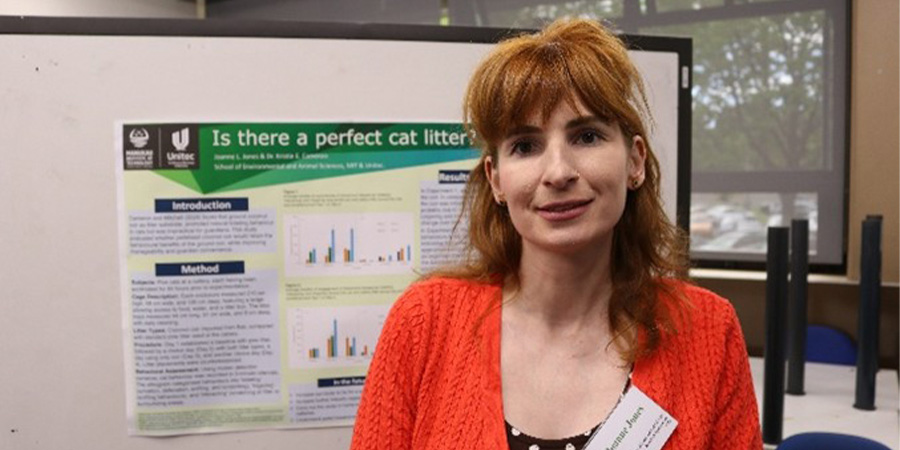
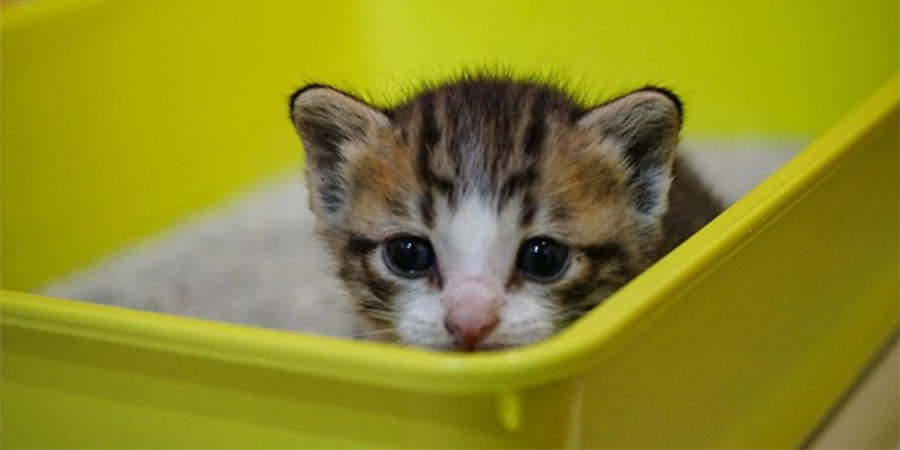
Lecturer Joanne Jones looked at whether pelletised ground coconut coir could support natural toileting behaviours in domestic cats.
The search for the perfect cat litter was the subject of Lecturer Joanna Jones’ poster presentation.
The study built on work that found, while ground coconut coir which closely mimics dirt promoted natural toileting behaviours in cats and provided a sustainable alternative to the pine shavings, it was messy and not user friendly for owners who had to clean up afterwards.
Ms Jones looked at whether the benefits of coconut coir for toileting behaviour would be maintained if it was produced as pellets.
Five individually-housed cattery cats were observed over four days comparing pine litter pellets with coconut coir pellets.
The cattery involved in the study reported decreased cleaning time and was positive about using the coir little pellets in the future.
“What we’ve seen are promising results that cats really do approve of a much more natural substrate, and the guardians are much, much happier with a much easier to clean pelletized version of that cat litter,” Joanne Jones says.
Dr Richard Jakob-Hoff of Auckland Zoo began the programme with a keynote presentation on two microscopic parasites which threatened the Operation Nest Egg Kiwi conservation programme, and the local beef and dairy industry.
While University of Auckland’s Associate Professor Anne Gaskett’s keynote in the afternoon programme focused on how sensory stimuli such as colours and smells affect interactions between animals, plants and fungi and their environments.