‘Seeing our face in our places’: Professor Rau Hoskins and the rise of an authentic Aotearoa architectural practice
In Brief:
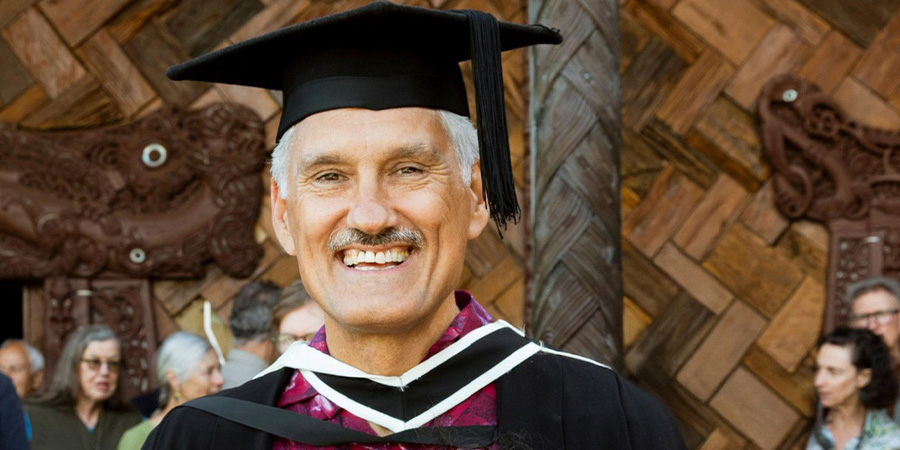
- Professor Rau Hoskins (Ngāpuhi, Ngāti Wai) delivered his inaugural address at Te Noho Kotahitanga Marae on Thursday 19 November 2026.
- Rau has played a pivotal role in advancing Māori architectural education, techniques and practice since joining Unitec in 1999 while introducing these to the training of a new generation of practitioners in this country.
- His role in the establishment of Te Hononga o Whaihanga ki Wairaka, a kaupapa Māori architecture studio has allowed ākonga ‘students’ to partner with whānau, marae, hapū and iwi to help design and deliver community-based projects which in turn deepen their own applied learning experience.
Mā pango, mā whero ka oti te mahi
‘By black and by red the work will be accomplished’
At the start of his inaugural address, described as a ‘snapshot of 36 years of kaupapa,’ Prof. Hoskins introduced this whakataukī that has informed his approach to both architecture and education.
“I am one agent for each of those (projects). There are many players. While sometimes I am seen to lead, none of them can happen without hau kāinga ‘local people’ inviting you into their place.
“You’ve got to have the cultural expertise. You’ve got to have technical expertise and you need the energy and enthusiasm of our tauira ‘learners.’ That’s what we bring. The bright eyes and bushy tails.”
It was a theme that was returned to many times during the presentation of ‘the kaleidoscope’ of Rau’s career.
Projects covered ranging from his first work fresh out of university in 1990 on the restoration of Te Para-o-Tane, the Cook Islands royal residence, to renovating a farm shed alongside students used by those seeking to protect and return land at Ihumātao, to a Venetian palazzo with the country’s first official entry in the Architecture Biennale of 2014.
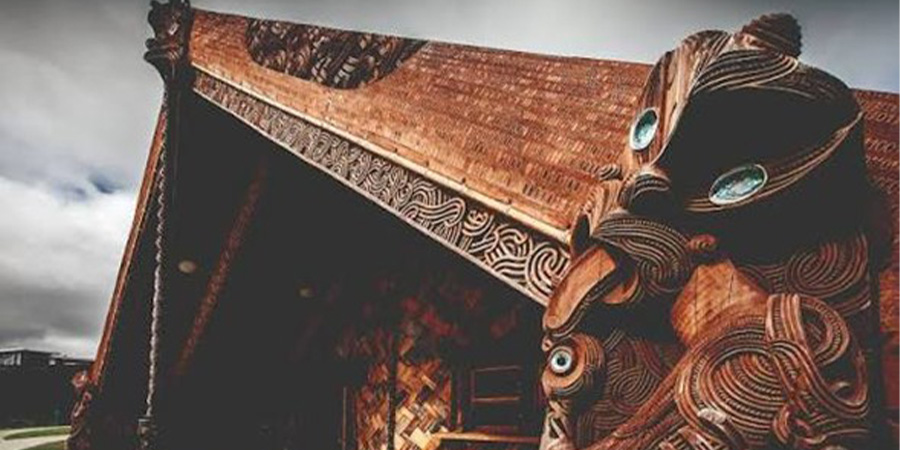
Professor Hoskins coordinated the building of Te Ngākau Māhaki, under the leadership of Dr Lyonel Grant, the wharenui at Ōwairaka | Mt Albert Campus
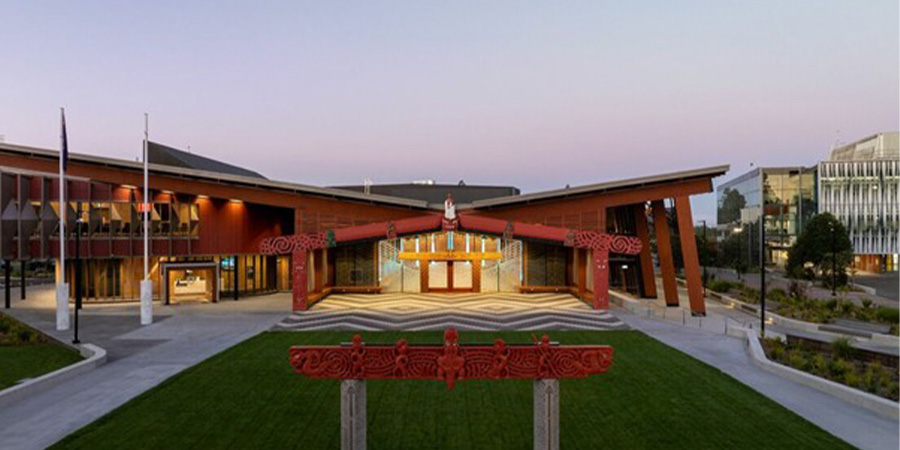
Professor Hoskins contributed to the design work for The Pā, at University of Waikato’s Hamilton Campus.
“Rau, you are the reason that gives our rangatahi hope, breathing and tino rangatiratanga (self-determination),” Tā Haare Williams (Tūhoe, Te Aitanga-a-Mahaki) told the audience at the address. “Every teacher’s role is to ensure every child’s dream goes to the place it needs to go.”
Tā Haare was kaumātua to several of the projects cited, as well as championing the establishment of Te Hononga during his time as Pae Arahi, cultural advisor to Unitec.
While Haare’s own memories of growing up in a Whare Raupō, a structure the walls of which are woven from reeds, informed a 2002 design and build on Rau’s whenua at Whangaruru led by Prof. Hoskins and Carin Wilson (Ngāti Awa) working alongside Unitec architecture students.
“Arena (Haare’s daughter) said, ‘you must be a fossil in New Zealand. You must be the only person alive who has lived in a raupō house.’ I remember one of my wishes as a child was that I had a mattress. Because we slept on the floor with bracken fern and that made the child.”
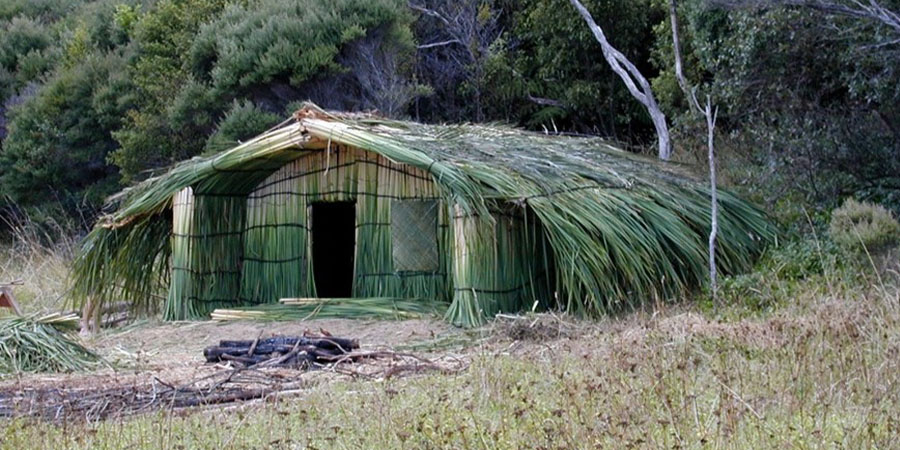
The Whare Raupō built in 2002.
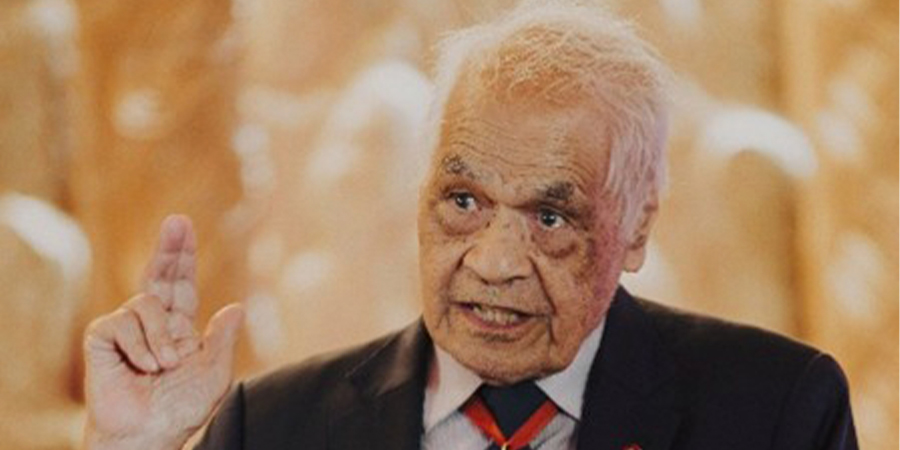
Tā Haare Williams whose memories of living in a house like the Whare Raupō as a child helped inform the project.
The Whare Raupō project and others by Te Hononga allowed students an immersive learning experience working with whānau and hapū, gaining understanding of their aspirations, traditional knowledge and techniques while enhancing their own understanding of kaupapa Māori architecture and its relevance to developing a form of practice that is authentically of Aotearoa.
The presence of not only kaumātua, but also tamariki at this project and others, a hallmark of Professor Hoskins’ process, continuing the transfer of knowledge and experiences intergenerationally.
“Kaiako ‘teacher’, kai rangahau ‘researcher’, kai hoahoa ‘designer,’ the weave of all those elements, we can’t separate those in te ao Māori ‘(Māori worldview) because you think you’re being a kai hoahoa but you’re actually being a kaiako or you’re being a kai rangahau at the same time,’ Rau saysof the different though ultimately unified roles he has played in guiding emerging architects for the last 27 years.
The address was delivered in Ngākau Māhaki, the wharenui designed by master carver Lyonel Grant.
Prof. Hoskins responding to the models and sketches delivered by Grant while coordinating the consultants and contractors who were engaged to build the marae.
“An important process that we negotiated with both Haares (Williams and Hare Paniora – present Pae Arahi). We were going to bring someone on to be the tohunga ‘cultural expert’, not the interior decorator but the tohunga.
“So Lyonel came here and he located this whare. He stepped it out. We agreed on dimensions. Then a few weeks later he stepped it out again and extended it another four metres. Everything else, all those decisions were made by him.
Professor Hoskins determination not only to practice architecture but to challenge who architecture served and whose stories were reflected in the built environment had defined his career, MIT and Unitec Head of Architecture Professor Peter McPherson told whānau, former students and colleagues in attendance.
Explaining Rau’s driving motivation as ‘seeing our faces in our places.’
“To me that simple phrase captures so much of his life’s work. It leads to creating spaces where people see themselves reflected. Where culture is visible and where communities feel a sense of belonging.
“Rau became committed to challenging the monocultural nature of architectural education even during his university years, then later as an academic and practitioner,” Prof McPherson says.
Following Prof. Hoskins’ address those gathered provided their own reflections including Carin Wilson who co-led Te Hononga until 2020 and Maurits Kelderman, a fellow partner in Design Tribe. The latter is a collaborative architectural practice founded by Rau, Maurits and others to provide Māori and wider community groups with access to high-quality architectural services that has now been in operation for more than thirty years.
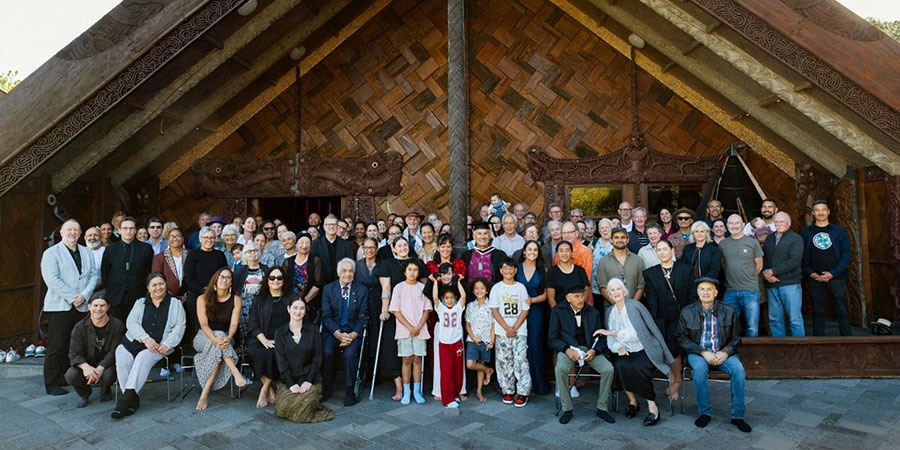
Whānau, colleagues and those who have been part of Rau’s journey as an educator, attending Professor Hoskins’s inaugural address.


