Rome residency brings a new Te Ao Māori lens to architectural research
In Brief:
- Associate Professor Renata Jadresin-Milic recently completed a prestigious three-month residency as the Robert Adam Rome Scholar in Architecture at the British School at Rome.
- Her research has strengthened connections between European architectural traditions and Te Ao Māori concepts including whakapapa, mauri and kaitiakitanga.
- Seven architecture students received INTBAU scholarships to experience international architecture education in Vicenza and Venice, expanding global learning opportunities for our learners.
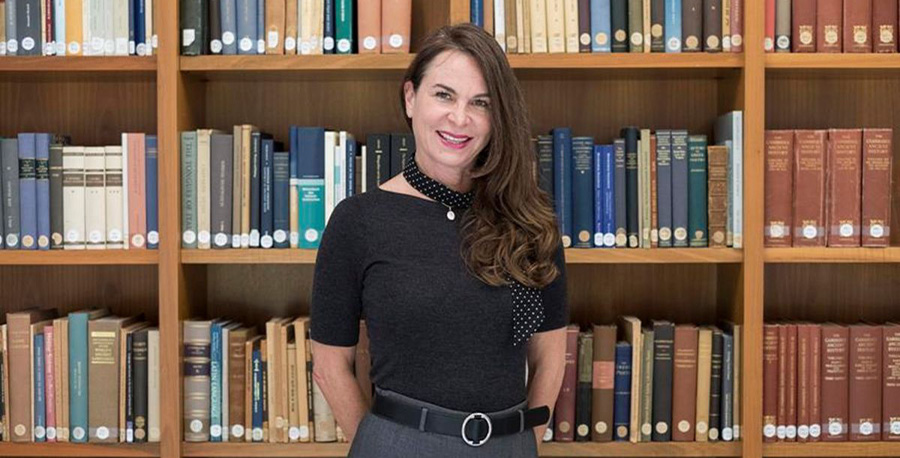
A prestigious residency in Rome has not only strengthened Renata Jadresin-Milic’s own research. It has given her new ways of bringing Te Ao Māori perspectives into architectural education.
The School of Architecture academic spent three months as the Robert Adam Rome Scholar in Architecture at the British School at Rome during Semester One.
While in Rome, her research focused on how architectural traditions are reinterpreted and renewed through the work of twentieth-century Italian architect Armando Brasini.
Immersed in Rome’s historic architecture, archives and international research community, Renata says the experience changed the way she sees architecture and helped her recognise more clearly the influence of Te Ao Māori on her own research.
“The most important thing I have learned from, and taken to Rome from Aotearoa, was not a set of ideas. Rather, it was a different way of seeing.”
Concepts including whakapapa (genealogy), mauri (life force that exists in all living and non-living things) and kaitiakitanga (guardianship) encouraged Renata to think differently about relationships between people, place, history, culture and responsibility.
These concepts were not applied directly to Rome or Brasini’s architecture but provided a lens through which ideas could be connected across different cultures and research contexts.
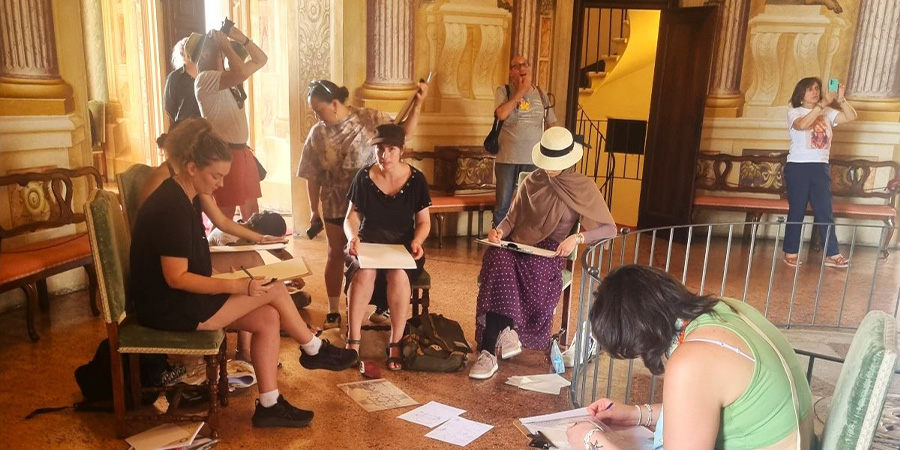
Seven School of Architecture students secured INTBAU scholarships to attend an International Summer School in Vicenza and Venice. Courtesy of the British School at Rome, 2026. Photo by Luana Rigolli.
“I increasingly see architecture not simply as the design of buildings, but as a relational cultural practice that connects people, places, histories, and knowledge systems.”
Renata says the residency will directly benefit her teaching, postgraduate supervision and collaborative research at MIT and Unitec.
Her research into Brasini also challenges conventional approaches to architectural history, exploring how traditions remain relevant by being reinterpreted rather than simply repeated.
“Through Brasini, I am exploring architecture not as a fixed inheritance but as an ongoing cultural conversation.”
The international connections established through the British School at Rome will also support future research collaborations, publications, exchanges and student opportunities.
For Renata, developing the next generation of architects is an important part of her research role.
“Mentorship and student support are not separate from research, but part of the same commitment to care, continuity, and the future of the discipline.”
That commitment is already creating international opportunities for our ākonga ‘learners’.
In June, seven School of Architecture students secured INTBAU scholarships to attend an International Summer School in Vicenza and Venice, where they experienced Palladian architecture and Italian cities first-hand while working alongside architecture students and practitioners from around the world.
Assoc. Prof. Jadresin-Milic says international experiences can have a lasting impact.
“Experiences like these can be transformative because they help students develop confidence, broaden their perspectives, and see themselves as participants in an international architectural conversation, while remaining grounded in the unique contexts and responsibilities of Aotearoa.”
The Rome residency ultimately reinforcing the value of connecting international architectural knowledge with the unique perspectives and responsibilities of Aotearoa.
“Architecture emerges from relationships between people, place, culture, history, and environment,” she says.
That creates a powerful connection between international research, Te Ao Māori (Māori world view), architectural education and opportunities for our future architects.
Photo of Associate Professor Jadresin-Milic courtesy of the British School at Rome, 2026. Photo by Luana Rigolli.


