Research funding for using AI to detect cognitive decline secured
In Brief:
- Professor Hamid Sharifzadeh has secured a significant grant via competitive research funding from Shanghai’s local government.
- A two-year project will bring MIT and Unitec and Shanghai Polytechnic University researchers together to develop AI capable of detecting early cognitive decline from speech across English and Mandarin.
Our partnership with Shanghai Polytechnic University (SSPU) in China continues to flourish after Computing and Information Technology Academic Programme Manager Professor Hamid Sharifzadeh secured RMB 400,000 (approximately NZ$100,000) in competitive research funding from the Shanghai local government.
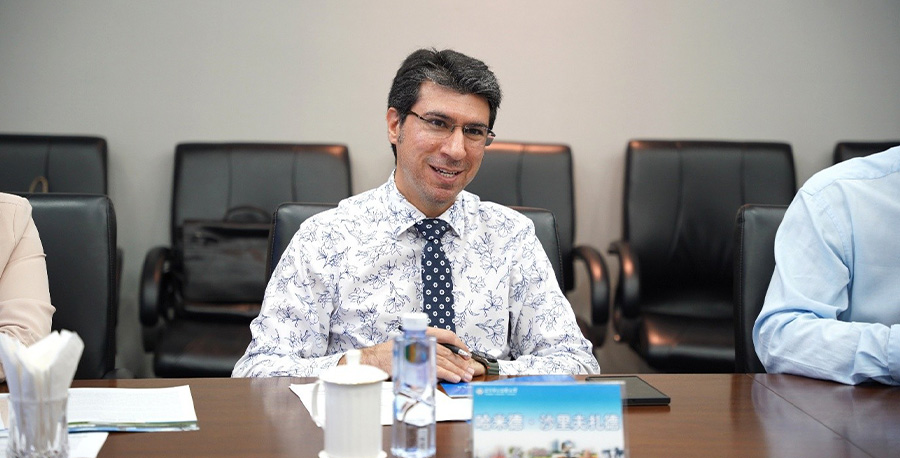
The two-year partner project will see Professor Sharifzadeh work alongside SSPU researchers and students on an ambitious application of artificial intelligence (AI): developing technology that could identify early signs of cognitive decline through the way people speak.
The funding is a significant achievement for Professor Sharifzadeh and recognition of the growing strength of our applied research, while also strengthening our developing relationship with SSPU.
International Partnerships Manager Jialu Ding says the grant’s approval demonstrates the value of the partnership and the international standing of MIT and Unitec’s research capability.
“The funding approval demonstrates the growing international recognition of our research capability and highlights the strength of our partnership with Shanghai Polytechnic University,” Ms Ding says.
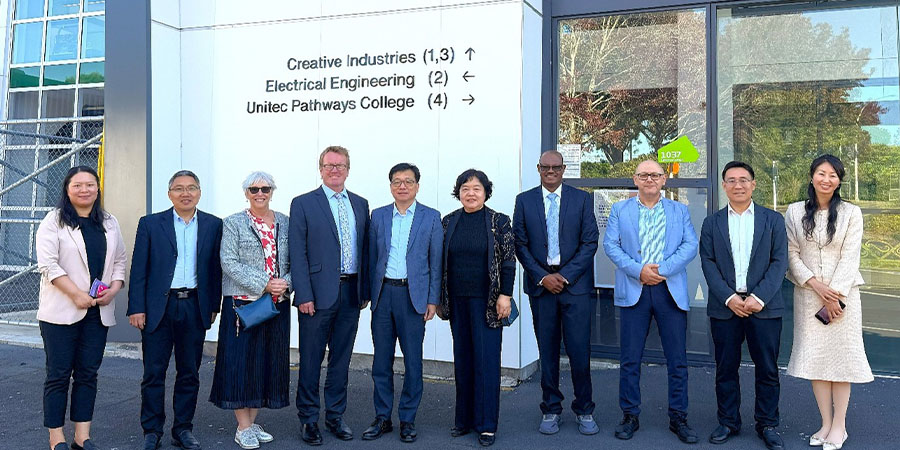
The funding announcement follows a visit from a senior SSPU delegation in May, which advanced discussions around a formal relationship between the two institutions focused on applied learning, industry-connected education and international collaboration.

MIT and Unitec hosted a senior delegation from SSPU in May 2026.
The funded project will turn that relationship into meaningful research and learning opportunities.
“Through this partnership, Professor Hamid will work alongside colleagues and students at Shanghai Polytechnic University to advance cutting-edge research, share knowledge, and create opportunities for future academic and student engagement,” Jialu explains.
Another SSPU delegation is expected to visit MIT and Unitec in October.
“Their visit will provide a valuable opportunity to strengthen academic ties, explore new areas of collaboration, and further deepen the partnership between our institutions.”
Professor Sharifzadeh says the project represents the culmination of years of research into the potential of speech and AI to understand human health.
“I’m delighted that this project has been funded, and, being selected under a competitive international programme, it reflects the strength of the applied research we’re building here at MIT and Unitec,” Prof Sharifzadeh says.
His research focuses on mild cognitive impairment, an early stage of cognitive decline when identifying changes sooner could potentially enable earlier intervention.
“Dementia is one of the defining health challenges of our time, and mild cognitive impairment (its early stage) is where intervention matters most,” Prof. Sharifzadeh says.
Current cognitive assessments can be time-consuming and difficult to scale. Speech, however, offers a potentially accessible alternative.
“Subtle changes in how we pause, hesitate, and structure our speech can reveal early signs of cognitive decline, and it can be captured cheaply and non-invasively.”

Prof. Sharifzadeh says the major research challenge is language. Most existing AI systems designed to analyse speech have been developed for a single language, particularly English, relying heavily on language-specific structures.
The project team will instead investigate more universal characteristics of speech, including acoustics, timing, rhythm and prosody, with the goal of creating AI models that can work across different languages.
“If we can make this work reliably across English and Mandarin Chinese, we take a real step towards screening tools that could serve ageing populations anywhere in the world.”
The partnership brings together complementary strengths from both our institutions.
Professor Sharifzadeh will lead the MIT and Unitec contribution in speech and AI, while SSPU provides access to computing infrastructure, researchers, students and clinical partnerships in China.
“What makes this especially meaningful is that it’s a true collaboration,” he says.
“The project brings together our expertise in speech and AI with SSPU’s outstanding computing infrastructure and clinical partnerships. Neither of us could do this work alone, which is exactly what a strong international partnership should look like.”
The first phase will involve building and validating the core AI models using established international datasets. The central research into multilingual AI will then be undertaken collaboratively with SSPU researchers and students.
In the final phase, the system will be validated in a real-world clinical setting, with open-source tools planned to enable researchers internationally to build on the findings.
Furthe key outcomes from this project will be developing the next generation of researchers and strengthening the relationship between our institutions.