Rare native reptiles bring biodiversity learning to life at Te Puna Kararehe
Students studying biodiversity are gaining rare hands-on experience with some of Auckland’s most elusive native reptiles thanks to a new live reptile collection being developed at our animal unit in Te Puna Kararehe (Animal Behaviour and Husbandry Centre) in Mt Albert.
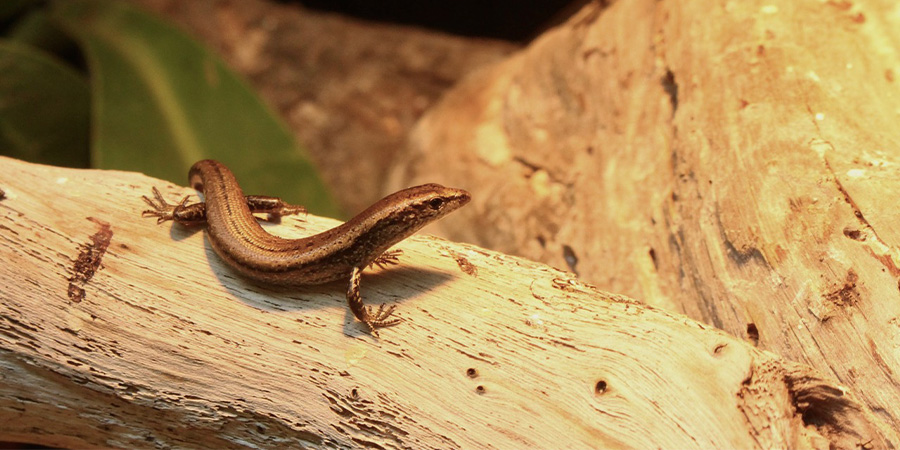
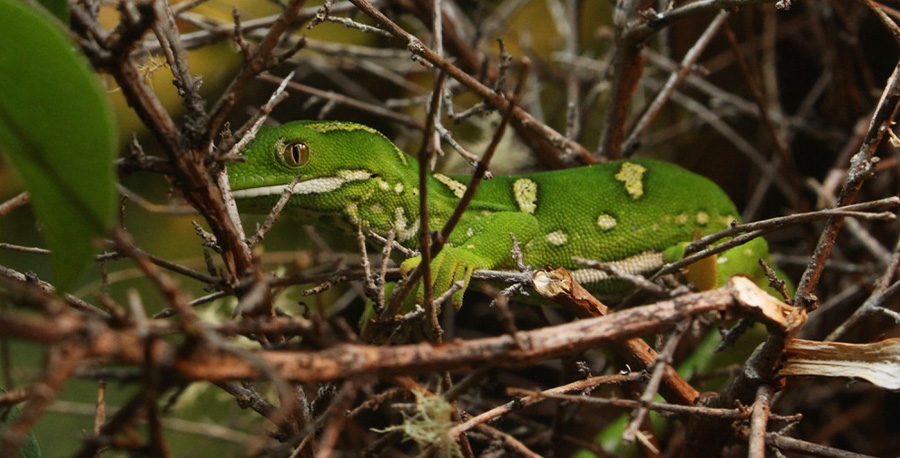
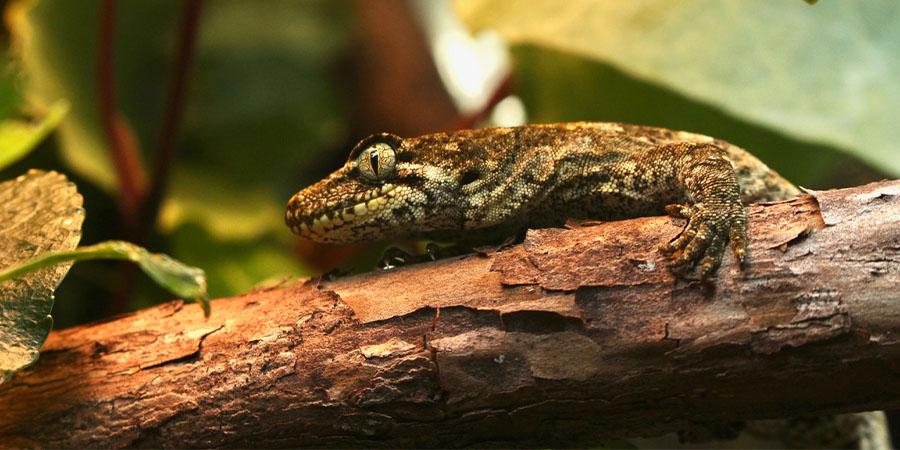
Our region is home to 17 species of native lizards, including the Elegant gecko, Shore skink, Moko skink and Forest gecko. Many of these are rare, difficult to spot in the wild and often found in isolated or inaccessible locations.
That scarcity has traditionally created challenges for teaching practical field skills, with students often unable to observe and compare different species in one setting.
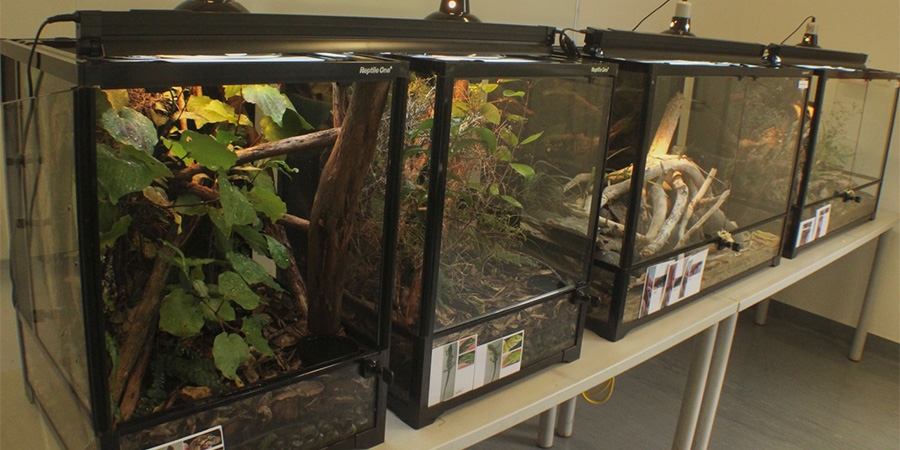
To address this, animal technicians from the School of Environmental and Animal Sciences began developing a specialised collection of live reptiles last year, bringing a diverse range of native species together in a single learning environment.
Senior Technician Benjamin Goodwin says the initiative is transforming how students engage with biodiversity studies.
“The concept of this collection is to maintain a wide range of local reptiles in one place, where biodiversity students can gain practical learning experiences alongside their academic studies,” Mr Goodwin says.
The collection allows students to build essential industry and conservation skills through direct interaction with the animals.
“These hands-on skills include safe handling techniques, reptile identification and animal observation, as well as animal husbandry and welfare.”
By combining practical experience with classroom learning, the initiative is helping prepare students for future careers in conservation, environmental management and animal care, while also strengthening awareness of Aotearoa New Zealand’s unique native wildlife.
“A lot of behind-the-scenes work has gone into getting this amazing range of taonga species here, from DoC permits to enclosure setup. Having this range of animals onsite for teaching gives us a wonderful resource,” says Head of School, Associate Professor Laura Harvey.
The project reflects MIT and Unitec’s commitment to applied learning experiences that connects our ākonga ‘students’ with real-world environmental challenges and conservation outcomes.