Proud alumnus thanks alma mater for celebrating Ni-Vanuatu culture on campus
In brief:
- This is the second time Vanuatu Bislama Language Week has been celebrated across Aotearoa New Zealand and it runs from 26 July – 1 August 2026.
- 1,161 people identified as Ni-Vanuatu in the last national census. Together with workers on seasonal work schemes they number around 15,000.
- Vanuatu has a population of just over 335,000 and is around 2,255 kilometres north-east of New Zealand.
Vanuatu Bislama Language Week is being celebrated across Aotearoa New Zealand as part of the annual Pacific Language Weeks programme from 26 July – 1 August 2026.
It is observed to honour and celebrate the linguistic and cultural diversity of the Ni-Vanuatu (local or native from Vanuatu) community in Aotearoa.
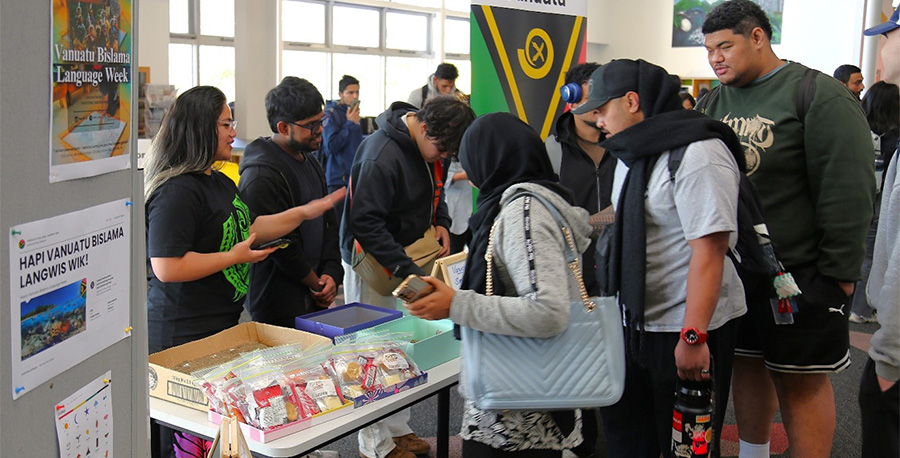
We celebrated Vanuatu Bislama Language Week with a traditional sand drawing activity held at the Koru Pod at our Owairaka Mt Albert Campus on Tuesday, 28 July. This was led by Pacific representative on the Unitec Student Council, Natara Pimoe. A traditional island lunch was held at the Pacific Centre afterwards attended by kaimahi and ākonga ‘learners.’
“As a proud Ni-Vanuatu, I believe our language, culture and traditions are at the heart of who we are,” says alumnus, Patrick Fred, who graduated with a Bachelor of Computing Systems in 2019 and now works as a senior executive in the Vanuatu Government in the Department of Customs and Inland Revenue based in Port Vila.
“No matter where our careers take us, we should always remain connected to our identity and pass it on to future generations. For me, Unitec was more than a place to earn a qualification. It helped shape my career, broaden my perspective, and reinforced the importance of embracing both education and our cultural heritage. I will always be grateful for the opportunities and lifelong lessons it has given me.”
Hailing from Nguna Island in the Shefa Province, Patrick came to Unitec in 2017 on a Manaaki Scholarship funded by the Ministry of Foreign Affairs. After graduating he returned to Vanuatu to work for the Government.
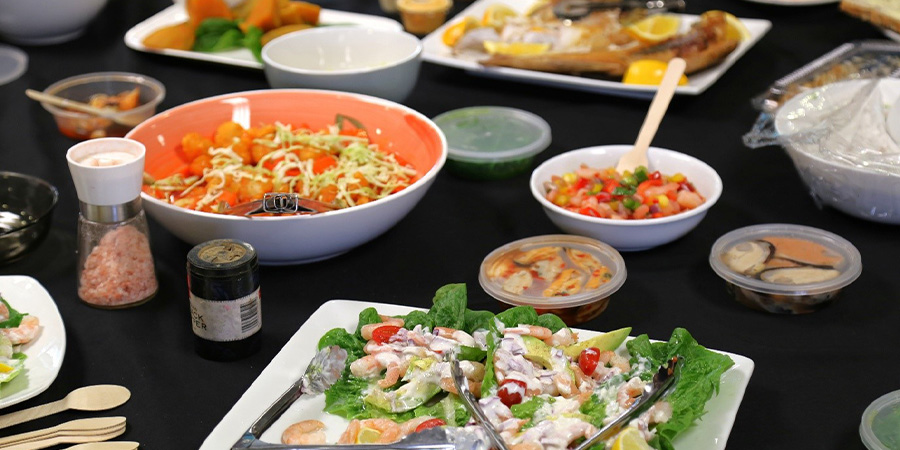
Lunch at the Pacific Centre to celebrate Vanuatu Bislama Language Week.
“Looking back at my time studying in New Zealand was a defining part of my journey. It gave me the technical foundation, confidence and problem-solving skills that have guided my career, from working in ICT and government systems to serving today in public administration and leadership,” Patrick says.
“Some of my favourite memories were the Pasifika gatherings, where we celebrated the diversity of our Pacific cultures. At the time, other Pacific communities had their own language weeks, but Bislama was not yet included. Seeing Bislama now recognised and celebrated at Unitec makes me incredibly proud.
“Tankiu tumas mo yu gat wan gudfala Bislama lanwis wik selebresen – Thank you and have an enjoyable Bislama language week celebration.”
This is the second year Vanuatu Bislama Language Week is being celebrated across the motu after its introduction by Ministry of Pacific People in 2025.
This year’s theme is “Tokbaot klaemet jenis – Hemi tru samting mo yumi mas lukaotem gud laef” – Talk about climate change – it is real, and we must look after life.
It carries a powerful message that highlights the urgency of addressing global warming and a call-to-action encouraging people to take meaningful steps to protect and preserve life, such as reducing carbon emissions, conserving natural resources, or supporting sustainable practices.
Quick Facts
1,161 people identified as Ni-Vanuatu in the last Census (Stats NZ 2023), however, when including temporary workers here on seasonal migration schemes such as RSE (Recognised Seasonal Employer), that number exceeds 15,000.
Bislama is one of the three official languages of the Republic of Vanuatu (the other two are English and French). It is a pidgin-creole language spoken natively in urban areas, almost entirely derived from English vocabulary.
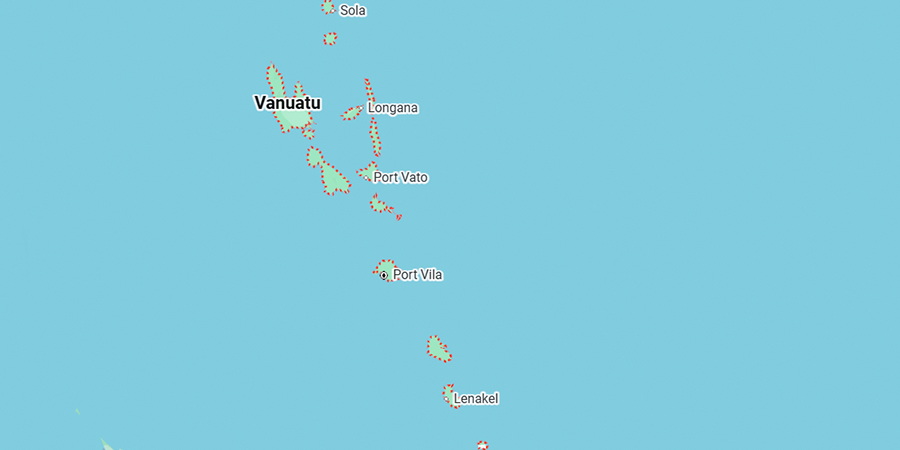
In addition, 113 indigenous languages are spoken across the 83 islands spread out over 1,300 kilometres in the Vanuatu archipelago. The density of languages per capita in Vanuatu is the highest of any nation in the world, with an average of only 2,000 speakers per language.
Formerly known as the New Hebrides, the country was renamed Vanuatu when it achieved independence on 30 July 1980. Ni-Vanuatu will celebrate their country’s 46th independence anniversary from British and French colonial rule on Thursday, 30 July.
Vanuatu has a population of just over 335,000 and is around 2,255 kilometres north-east of New Zealand.
Most of the Pacific island nation’s population reside in the largest towns; the capital Port Vila, on Efate, and Luganville on Espiritu Santo, the largest island in the archipelago.
Vanuatu’s economy is largely dependent on revenue from tourism, agriculture, labour mobility, and the country’s citizenship schemes.
Learn the language
Here are some simple phrases you can use this week:
Halo – Hello/Greetings
Tankyu – Thank you
Plis – Please
Sori – Apologies/Sorry
Nem blong mi – My name is


