NZ Sign Language Week: Deaf ākonga thrive in automotive training
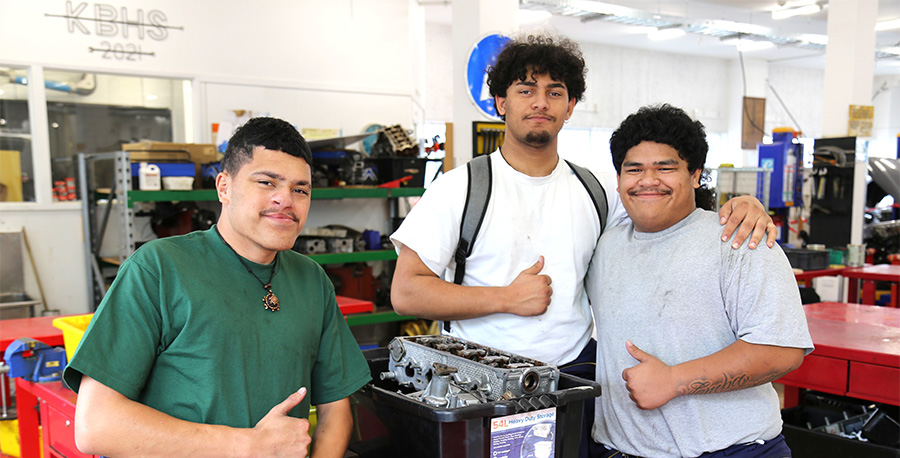
Three learners are proving that peer support and inclusive teaching can break down barriers in their automotive engineering course as we mark New Zealand Sign Language Week from 4-10 May 2026.
Destyn Coleman, Jona Maki Joel and Callan Waters joined the Level 3 Automotive programme run by the Unitec Pathways College (UPC) at the start of this semester through a partnership with Ko Taku Reo, a specialist provider supporting deaf and hard-of-hearing (DHH) learners in Tāmaki Makaurau – Auckland.
“Prior to the start of this year, Ko Taku Reo explored the possibility of placing three automotive students within our space,” says Transition Coordinator Jessica Rudman. “It’s been fantastic to see how well they’ve settled in and engaged with their learning.”
The trio say it’s the inclusive, whānau-based environment alongside interpreters, supportive tutors and welcoming classmates—that has enabled them to succeed.
“There are two official languages in Aotearoa and NZSL is one of them,” says Destyn. “More people need to recognise this and learn how to use sign language. You never know what a deaf person is going through trying to navigate the hearing world.”
A self-confessed car enthusiast, Destyn says his studies are helping to turn his passion into a future career. “I love how cars sound and how they go. Why pay heaps for mechanics when you can learn to do it yourself? My goal is to run my own car business.”
For Jona, this week is about Kiwis making an effort to connect with the deaf community by taking small steps to increase awareness nationally.
“If everyone could make an effort to learn one thing every day—like saying ‘good morning’—it would really help build awareness around sign language skills,” Jona says. “Knowing sign language means you can socialise with anyone, so nobody feels left out.”
He adds that having the right support in class is critical. “If I don’t understand something, I have an interpreter who uses sign language and that makes it much simpler. We’ve also built great relationships with other students—we have fun, there’s banter, and we connect well.
Jona’s ambition is to establish his own panel beating business.
Callan says inclusion is about equality and communication. “If more people could learn sign language, they can join our deaf communities instead of being separate from us. We can share the space and communicate as equals.”
While acknowledging he cannot hear, Callan says the support he’s received has made a significant difference. “I’m very lucky to have an interpreter in class—it helps me communicate. At first, I was nervous because I didn’t know anyone, but as you build rapport, everyone becomes more confident and comfortable with each other.
“I just want to learn everything I can about fixing cars so I can do it myself. Being here is about building knowledge to become a mechanic.”
New Zealand Sign Language Week is marking 20 years of NZSL as an official language of Aotearoa alongside te reo Māori. This year’s theme, “An Aotearoa Where Anyone Can Sign Anywhere,” highlights the importance of accessibility and inclusion.
MIT and Unitec is using the week to reinforce its commitment to equitable education—ensuring learners of all abilities can participate and succeed.
“We currently have one student supported by an NZSL interpreter and two supported by note takers this semester,” says Access Coordinator Khushboo Kakkad. “Our role is to ensure students have the tools they need to fully access their learning.”
Through its Access4Success team, MIT and Unitec provides NZSL interpreting, note-taking and assistive technologies, alongside tailored disability support services.
As these three ākonga ‘students’ demonstrate, when barriers are removed and inclusion is prioritised, learners can focus on building skills and confidence, to help them realise their dreams.
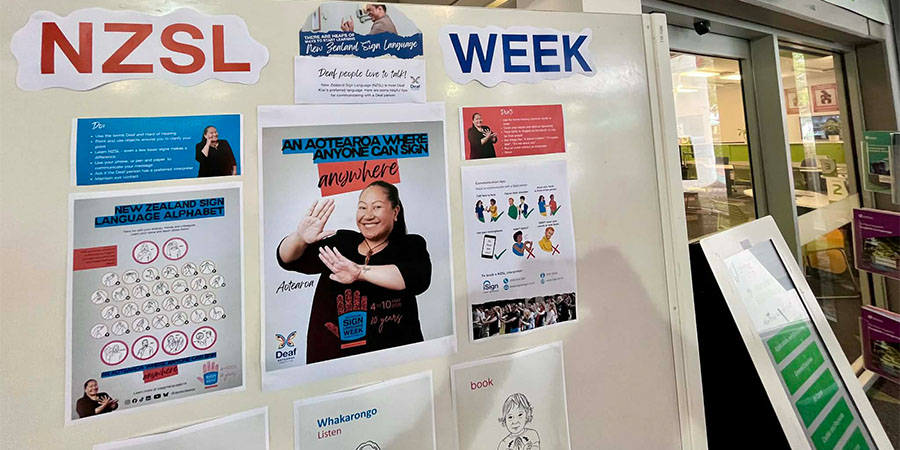
How can kaimahi ‘staff’ support learners who are Deaf or Hard of Hearing?
- Get to know your student and discuss their communication needs
- Use your normal speaking voice at its usual volume
- Ensure background noise is minimised
- Always face the students when you are speaking and do not speak whilst writing on a whiteboard
- Clearly repeat any questions asked by students before giving a response
- Use assistive listening devices such as induction loops or transmitter/receiver system microphones if available
- If the student uses New Zealand Sign Language, ensure NZSL interpreters are available and the student can see them
- Provide written materials for all information, including announcements about time changes or field work.
- Provide lecture slides in advance
Find out more about our services for the Deaf Community
Access4Success Disability Service
Resources
Learn NZ Sign Language on this free learning portal.


