MIT and Unitec growing AI Agents to transform Teaching and Learning
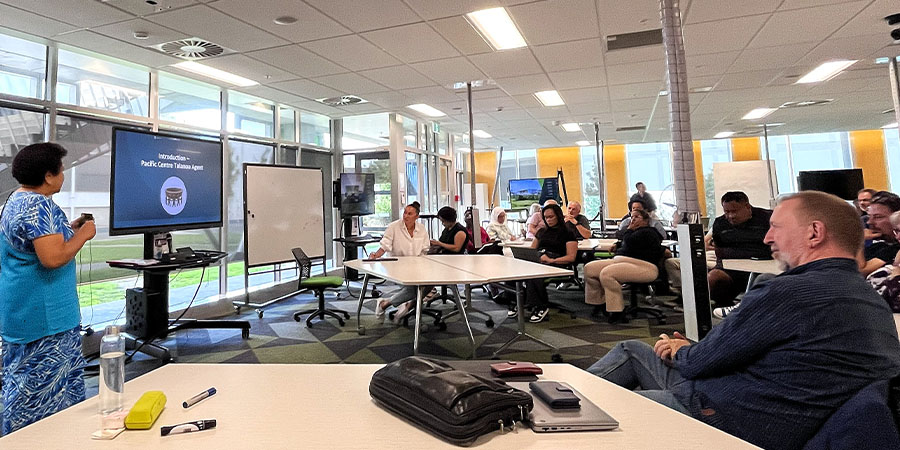
Close to a hundred kaimahi (staff) from Manukau Institute of Technology and Unitec gathered at our Mt Albert and Otara campuses on 10–11 February to explore how agents using artificial intelligence are reshaping teaching and learning.
Hosted by the Ako AI Agents project team, the showcase events highlighted more than 30 AI agents developed over the past year — each designed to enhance the learning experience of our ākonga (students) and support kaiako (lecturers).
These agents, powered by Cogniti, an education focussed AI platform developed by the University of Sydney, function similarly to ChatGPT-style chatbots, but with a critical difference: they are custom-built through partnerships between academic advisers and lecturers to meet specific needs.
From trades and health to early childhood and Pacific success, each agent reflects the expertise of our kaimahi and the realities of vocational education.
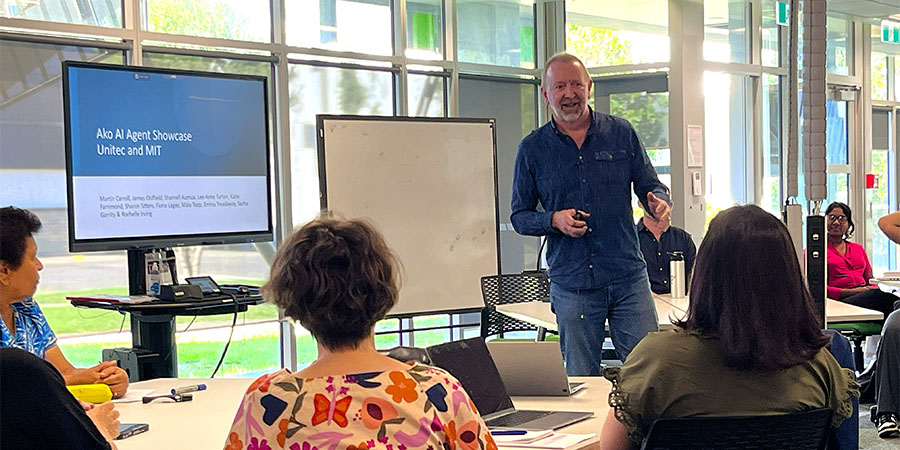
Deputy Chief Executive Academic Professor Martin Carroll opened the sessions by positioning AI as both an opportunity and a responsibility for the sector. While acknowledging that MIT and Unitec are still in the early stages of AI agent development, he expressed confidence that the institutions are well placed to lead in this space over the next 18 months.
“We’re not the only providers doing this, but we’re ahead of quite a few others. We need to stay there. We need to ramp up the way we use these and do this at scale.”
Professor Carroll says while it was important to “adapt, evolve and embrace the technology”, AI will support teaching — not replace it.
“AI is going to unquestionably enhance the learning experience and change the way that we work as teachers. But I cannot see them replacing us, ultimately, as being responsible for the students learning journey, for the curriculum, for assessment, and for maintaining these standards,” he says.
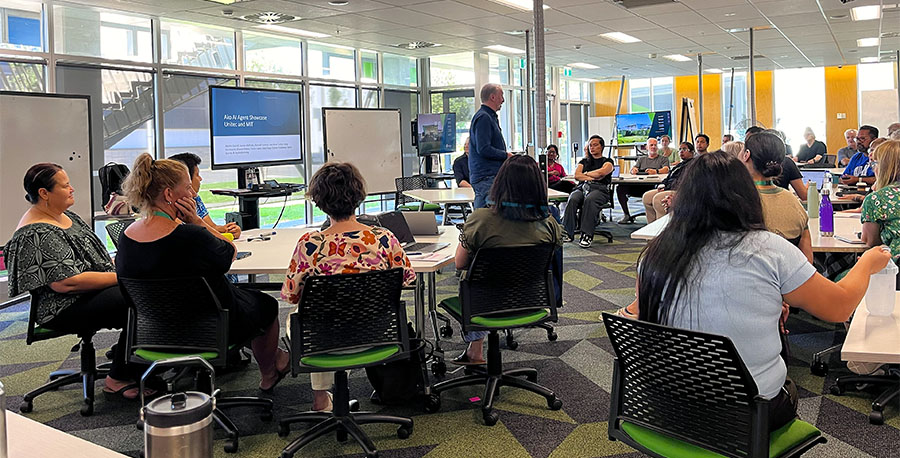
Project leaders Associate Professor James Oldfield, Dr Maia Topp and Sharnell Aumua provided an overview of the initiative, followed by demonstrations of six agents by teaching and academic development staff.
“Central to this work are our kaimahi, whose specialist knowledge and testing shape each agent and ensure its accuracy, relevance and safety,” Ms Aumua explained.
Examples included:
- Immersive simulations such as the Bachelor of Nursing’s Deteriorating Patient & De-escalation agent and Medical Imaging’s ISBAR agent, enabling students to practise critical decision-making in safe, realistic environments.
- Personalised skill development through the Trades & Services’ Automotive Math agent, offering 24/7 access to unlimited practice and tailored guidance beyond the classroom.
- Reflective and dialogic learning via the Pacific Centre’s Talanoa agent and the Early Childhood Reflection agent, which use Socratic questioning to deepen critical thinking and application.
“Each agent is thoughtfully designed, ethically developed and carefully managed,” Ms Aumua adds, reinforcing that innovation and academic integrity go hand in hand.
Despite the busy start-of-semester period, both events were well attended and generated significant interest. Feedback was overwhelmingly positive, with one attendee describing it as “the best PD they’d had for ages.”
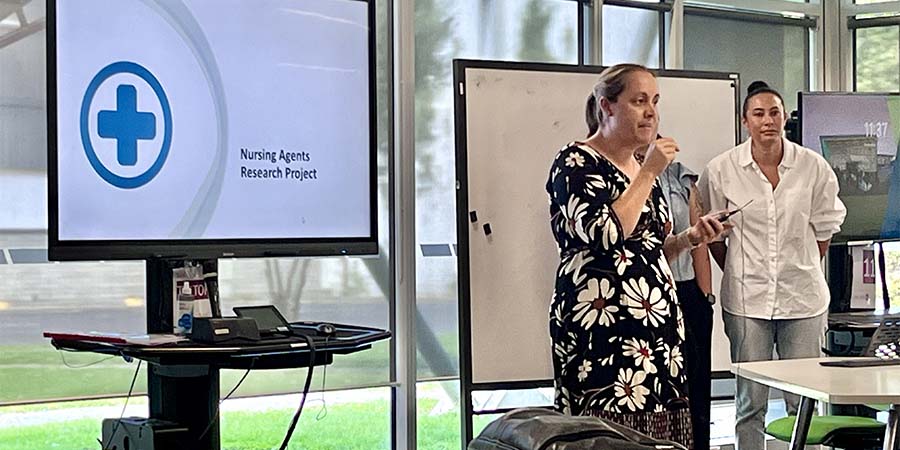
Since the showcases, the project team has received numerous enquiries from staff keen to explore how AI agents could support their own areas of teaching.
“The questions at the sessions reflected the broad interest of staff in this new technology and how it could relate to their mahi,” Assoc Prof Oldfield says.
“Finding time is always a challenge, yet the sessions highlighted that time invested in developing agents could really pay off by improving the learning experience for all involved.”
Both showcase events marked a shift toward scalable, educator-led AI integration within a polytechnic context. Ako AI Agents represent a practical pathway for MIT and Unitec to enhance learner success, extend access beyond the classroom, and strengthen their position as sector leaders in applied AI for education.


