Language keeps Fijian identity alive at home, work and across generations
In brief:
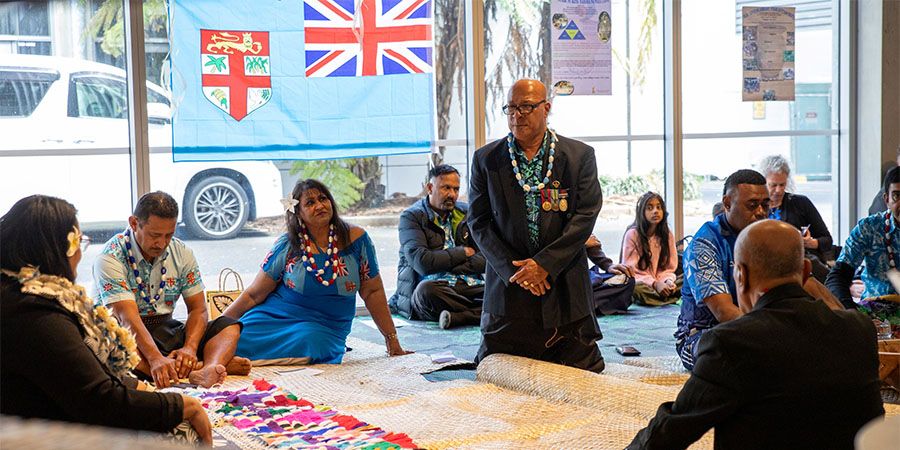
- Fijian kaimahi ‘staff’ came together on Tuesday 6 October 2026 to celebrate Macawa ni Vosa vakaViti – Fijian Language Week with a kava ceremony and shared traditional lunch.
- Four members of our Bula Community shared personal stories of how Fijian language connects them with family, identity, cultural heritage and colleagues in the workplace.
- Kaimahi highlighted the importance of passing vosa vakaviti and cultural knowledge on to young Fijians and future generations.
Connecting language with identity and the importance of maintaining this at home and the workplace was at the heart of the gathering held in the Events Kitchen in Te Puna.
Held from 4–10 October as part of the Ministry for Pacific Peoples’ Pacific Language Weeks programme, this year’s theme – “Na noqu vosa me tekivu mai vale ka me’u na vosataka e na veisiga” – translates as My language starts at home and I need to speak it every day.
The theme resonated strongly with the Bula Community, who shared how speaking their language helps keep their cultural identity alive – both at home with their families and in the workplace with colleagues and ākonga ‘learners’.
The celebration opened with a kava welcome ceremony, with Pacific Director Doana Fatuleai and Bachelor of Construction alumnus James Kado as guests of honour.
Doana and James both gave their reflections on Fiji Language Week with Doana emphasising the importance of maintaining cultural identity and how it enhances inclusion and diversity across our organisation.
James recalled his time being one of the few Fijian students and how Unitec opened doors and opportunities for him that sustained him throughout his career as a Quantity Surveyor.
The event concluded with a shared lunch of traditional Fijian food provided by the Bula Community.
Four of our Fijian kaimahi opened up about their heritage and how speaking vosa vakaviti grounded them in their identity.
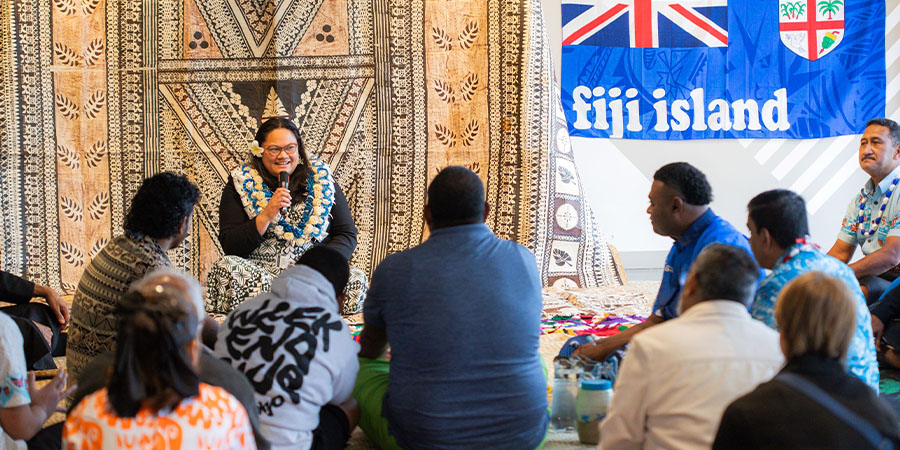
Pacific Director Doana Fatuleai provides her reflections on Fiji Language Week and how it contributes to diversity and inclusion on our campuses.
Meet our bula community
Maureen Prasad – Recruitment Consultant
For Maureen, keeping language alive is particularly important for families living away from Fiji.
“In a world of technology and digital, a lot can get lost. It’s important to be able to connect at different levels, and language is one of those mechanisms to connect.”
Maureen, who was born and raised in Fiji and hails from Nausori, where the airport servicing the capital Suva is located.
She has lived in New Zealand for more than two decades, has made passing on her language to her two daughters a priority.
“It was really important for us, as parents, to pass that identity, that language, to the kids, and for them to be able to understand who they are, and where they’re from.”
She says language can also break down barriers between generations and create an immediate sense of connection.
“Knowing your language sets you apart from others. If you identify with someone who is also Fijian, you can go up to them and connect with them through language.”
Arun Deo – Research Advisor
Arun says language provides a direct link to his family history and the journey of his ancestors.
Originally from Nasealevu in Fiji’s Macuata District, Arun speaks Fiji Hindi with his family and sees language as an important way of honouring his heritage.
“Language is more than a way of communicating; it is a connection to our history, values, and ancestors.”
Arun’s ancestors arrived in Fiji as indentured labourers and eventually made the country their home. Speaking Fiji Hindi helps him maintain a connection with their resilience and legacy.
“Through speaking Fiji Hindi, I remain connected to their journey, resilience, and legacy. The language serves as an important link to my family history and cultural roots.”
He also brings that cultural identity into his workplace by valuing linguistic diversity and sharing his heritage with colleagues.
Josaia Vunitali – Automotive Lecturer
Josaia says speaking Fijian every day is a way of grounding the next generation in their culture.
Originally from Tavua Levu in western Viti Levu, where the famous Fiji Water bottling facility and home of Fiji’s biggest gold mine Vatukoula (Goldstone) is located, Josaia speaks vosa vakaviti with his 13-year-old son and work colleagues in the ‘Bula Vuvale’ at MIT and Unitec.
“Dialoguing with my son in our Fijian vernacular daily at home reminds him of his identity and connects him with his culture of being a Fijian.
“For us Pasifika people, our language is our identity, customs and traditions. It’s important to speak my native language to embrace my Fijian identity.”
He believes young Fijians have an important role to play in carrying that identity forward.
“It’s very important for our young people to learn, understand and embrace their culture, language and traditions as it defines them to the rest of the world and grounds them to know that we are the people of the Bula smile – and caring, sharing and love is embedded within us as Fijians.”
Sana Saleem – Subject Librarian (Pacific)
Sana says sometimes a single word can be enough to create belonging.
With family connections to Saunaka and Sabeto in Nadi, Sana learned spoken and written Fijian from her elders and through school. Today, she sees language as an important way of connecting with Fijian colleagues and ākonga.
“Knowing the language helps me connect with my Fijian colleagues and students at work. Sometimes a simple ‘Bula’ can brighten someone’s day and create a sense of belonging and connection.”
Sana says vosa vakaviti keeps her grounded in her identity and connects her to both her ancestors and the wider Pacific.
“My identity is very important to me, and vosa vakaviti helps keep me grounded in my roots.”
Her recent visit to Fiji reinforced the importance of seeing young people confidently using the language.
“It was cool to see young people embracing the language and using it so naturally in their everyday lives.”
Across the Bula Community, maintaining language is also about maintaining connection to vuvale (family), vanua (land and identity), culture and community.
For Fijian communities living in Aotearoa, keeping vosa vakaviti alive means ensuring those connections continue to be heard, spoken and shared – at home, in education and in our workplaces.
Fiji Language Week celebrations this week provided an opportunity for kaimahi to strengthen those connections and celebrate a language and culture which is an important part of our diverse communities at MIT and Unitec.
Quick facts about Fiji
- The number of people identifying as having Fijian ethnicity in New Zealand, according to the NZ Census in 2023 is 25,038 (Stats NZ).
- The population of Fiji is around 928,784 (2024).
- Fiji lies about 1,100 nautical miles (2,000 km; 1,300 mi) north-northeast of New Zealand. Fiji consists of an archipelago of more than 330 islands—of which about 110 are permanently inhabited.
- This ethnic makeup of Fijians is Indigenous Fijians (54.3%), who are Melanesians, although many also have Polynesian ancestry; and Indo-Fijians (38.1%), descendants of Indian contract labourers brought to the islands by the British colonial powers in the 19th century.
- About 87% of the total population live on the two major islands, Viti Levu and Vanua Levu.
- Fiji’s population mostly reside on Viti Levu’s coasts, either in the capital city of Suva, or in smaller urban centres such as Nadi (where tourism is the major local industry) or Lautoka (where the sugar-cane industry is dominant).
- Fiji operated as a British Crown colony until 1970, when it gained independence and became known as the Dominion of Fiji.
- In 1987, following a series of coups d’état, the military government that had taken power declared it a Republic.
- Fiji has one of the most developed economies in the Pacific through its abundant forest, mineral, fish resources and tourism industry.


