Faith, community, family at the core of Samoa Language Week celebrations on our campuses
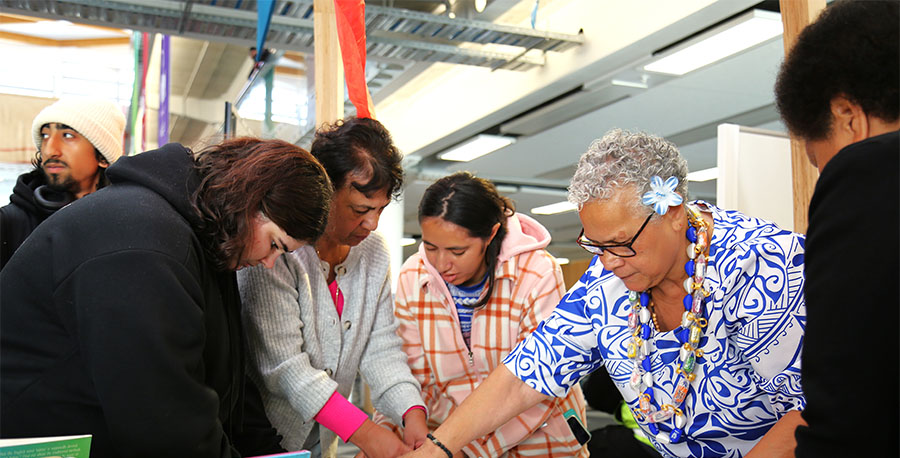
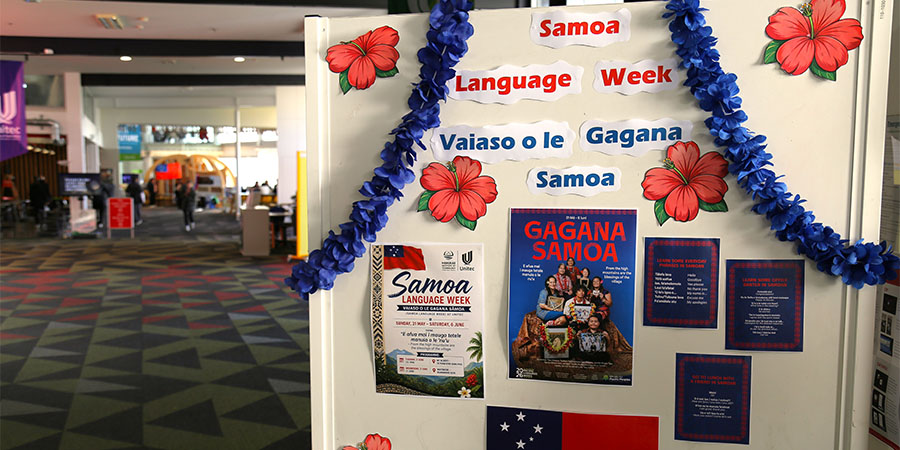
Staff and students are marking Vaiaso o le Gagana Sāmoa (Samoa Language Week) across our campuses this week with a focus on the core pillars of Samoan culture: aiga (family & community), matai (chiefly hierarchy) and lotu (church/faith).
Celebrations took place at both the Mt Albert (Tuesday, 2 June) and Waitākere (Wednesday, 3 June) campuses.
We shared language, culture and traditions through engaging activations while reflecting on this year’s theme: “‘E afua mai i mauga tetele manuia o le ‘nu’u” – “From the high mountains are the blessings of the village.”
Interim Manager Pacific Success, Sooalo Laupu’e Bentley-Gray says the week is an opportunity for Samoans in Aotearoa New Zealand to celebrate their heritage while increasing understanding with the wider community.
“Being able to celebrate Samoan Language Week this week at our Mt Albert and Waitākere campuses is a huge honour as Samoans living in Aotearoa New Zealand,” Daisy says.
“The opportunity to share parts of our culture with our community here is a blessing, especially as we commemorate 64 years of Samoa’s Independence. This week is special for all Samoans in Samoa and in the diaspora.”
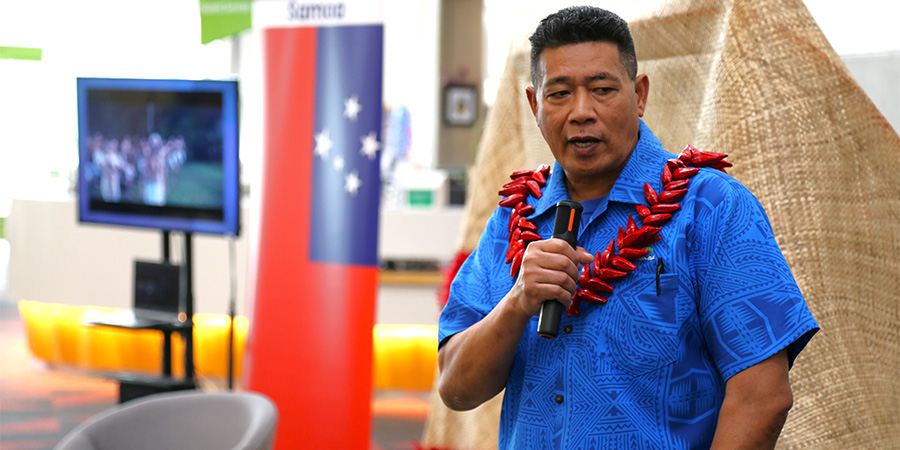
The programme was facilitated by the Pacific Centre with support from our Samoan kaimahi ‘staff’ and students who ran cultural activations and demonstrations such as ulalole (lolly necklace) making, a proverbs and phrases workshops, and talanoaga forum (conversations) with kaimahi who hold chiefly matai titles in Samoa.
Chief Executive, Professor Christina Hong was one of many senior leaders in attendance and was acknowledged for her support of the Samoan and Pacific community by Daisy in her opening remarks.
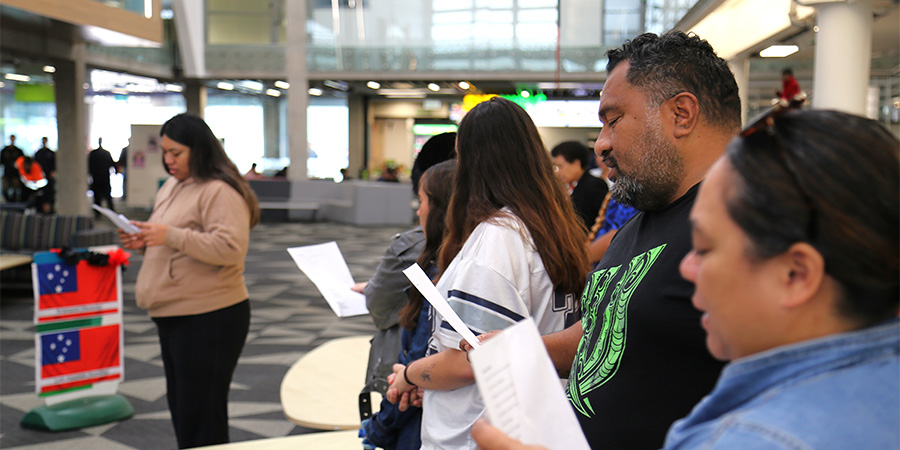
The celebrations concluded with performances by our Trades students and a traditional Taualuga dance, followed by a shared Samoan lunch featuring favourites such as koko-alaisa (cocoa rice) and panikeke (pancakes).
Quick Facts
There are 474 students of Samoan heritage at our Mt Albert and Waitākere campuses and 1,195 Samoan students at our Manukau and Ōtara campuses.
The headcount of kaimahi ‘staff’ who identify as Samoan is 53 at our Mt Albert and Waitākere campuses and 55 at our Manukau and Ōtara campuses.
Samoans work across the organisation as professional and academic staff and bring their own culture, experiences and values to their respective roles.
Samoans make up one of New Zealand’s largest ethnic communities, with Samoan recognised as the country’s third most-spoken language after English and te reo Māori.
According to the 2023 Census, 213,069 people identified as being of Samoan ethnicity, with almost 65 per cent living in Auckland. More than 55,000 Samoan New Zealanders were born in Samoa, highlighting the strong connections that continue to exist between Aotearoa and the Pacific nation. By comparison, Samoa’s population is estimated to be close to 220,000 people.
This year’s Samoa Language Week also coincides with the 64th anniversary of Samoa’s Independence. On 1 June 1962, Samoa became the first Pacific nation to regain independence in the 20th century, ending almost five decades of New Zealand administration.
This week is an opportunity to recognise the enduring contributions of Samoan communities to New Zealand’s cultural, social and economic fabric, while honouring the language, traditions and values that continue to connect generations of Samoans living here.
Meet our Samoan Kaimahi and Ākonga:
Lepua Tu Nuualiitia
Village Affiliations: Falefa, Falelima & Utuali’i
Māori & Pacific Trades Training Relationship Manager
“This year’s Samoa Language Week theme reflects my own life journey. I am a product of this proverb. The person I am today has been shaped by my ancestors, my village, my great-grandparents, grandparents, parents, family and community. Their influence, guidance and support have provided the foundation for everything I have achieved,” says Lepua.
“The theme reminds me of the importance of honouring our cultural roots and recognising that success is never achieved alone. It is built on the collective strength of those who come before us and those who walk alongside us. Even throughout my time at Unitec, the students, staff and colleagues I have worked with have contributed to my growth and development in my role as a Student Experience Partner in the Trades School.”
Lepua grew up in Te Atatū North in West Auckland, where faith, family and culture were central to his everyday life. His father migrated from Samoa in the 1950s and later brought his mother to New Zealand after they married in Samoa. As the youngest of five siblings, he was raised with values that remain important to him today: loving God, honouring his parents, and caring for his family.
“Although my parents have since passed away, those values continue to strengthen the bond I share with my siblings and wider family,” he explains.
Lepua says his connection to Samoan language and culture began at home through nightly family devotions, where they prayed and sang hymns in Samoan.
“While I was born and raised in New Zealand, being surrounded by extended family and the wider Pacific community helped me maintain strong cultural connections. Later in life, being selected to play for the Manu Samoa rugby team further strengthened my appreciation for the language, culture, music and traditions of Samoa.”
“Today, I feel fortunate to work alongside the Pacific Centre at Unitec. Having daily conversations with Samoan-speaking staff, students and visitors creates what feels like a small village within the institution — a place where language, culture and knowledge are shared and celebrated.”
Lepua’s message to staff and students is to embrace and celebrate cultural identity.
“In a diverse country like New Zealand, opportunities to connect with Samoan people and culture are everywhere. By learning about and engaging with different cultures, we gain a deeper appreciation of the people, stories and values that shape our communities.”
“I have seen many Pacific students discover a renewed sense of pride in their heritage through their experiences at Unitec, and I encourage everyone to remember who they are and where they come from. Those connections help shape our identity and remind us of our unique place in the world.”
One proverb that has always resonated with Lepua is “E le sua se lolo i se popo e tasi” — “It takes more than one coconut to produce a great flow of oil.”
“For me, it is a powerful reminder that none of us succeed on our own. Every achievement is the result of the support, encouragement and contributions of our family, village and community.”
Karen Petana-Ioka
Village affiliations: Moata’a
Lecturer, Bridging Education
“This year’s Samoa Language Week theme highlights the important role that elders, chiefs and community leaders play in guiding and supporting future generations,” says Karen Petana-Ioka.
“They say the proverb reflects the Samoan values of fa’aaloalo (respect), service and collective responsibility, recognising that the wellbeing and success of a community are often shaped by those who lead with wisdom and humility.”
Karen says these values continue to influence her work, where respect, meaningful relationships (vā fealoa’i) and service to others are central to how she engages with students, colleagues and the wider community.
Her strong sense of identity has been shaped by family connections to the village of Moata’a in Samoa, as well as the influence of parents, grandparents, church and education. Growing up immersed in Samoan language and culture, her experiences in attending school in Samoa and involvement in her faith community helped reinforce the values and traditions that continue to guide her today.
Maintaining those connections remains an important part of everyday life. Speaking Samoan at home and in church, participating in community events and staying connected to family are all ways they continue to nurture their language and cultural heritage while living in Aotearoa.
Karen believes tertiary institutions such as MIT and Unitec have an important role to play in celebrating and valuing cultural identity. Encouraging staff and students to embrace their language, culture and ancestry helps foster a greater sense of belonging, strengthens connections across communities and ensures cultural knowledge is passed on to future generations.
“A Samoan proverb that resonates strongly with me is “E lele le toloa ae ma’au lava i le vai” — the toloa bird may travel far and wide, but it always returns to the water.
“I see this as a reflection of many Samoans who pursue education, careers and opportunities around the world while maintaining strong ties to their homeland, culture and identity.”
Natara Lata Pimoe
Village affiliations: Sa’asai & Maagiagi
Pacific Representative, Unitec Student Council
“This year’s Samoa Language Week theme is a reminder that the achievements and opportunities enjoyed today are built on the sacrifices and resilience of those who came before,” says Natara Lata Pimoe, who sits on the Unitec Student Council as its Pacific representative.
Born and raised in Samoa before moving to New Zealand, Natara says the values of respect, humility, service and family have shaped her identity and continue to guide her journey as a student leader. She credits her family, village and wider community for helping her develop the resilience, gratitude and sense of responsibility that underpin her studies and leadership roles.
“As a student, PASS Leader and Pacific Representative, I see the theme as a reflection of collective success. I believe my accomplishments are not mine alone, but the result of the support, prayers and guidance of the people around me,” Natara says.
“In turn, I’m committed to supporting other students, particularly Pacific learners, to achieve their own goals and become future leaders within their communities.”
Maintaining strong connections to Samoan language and culture is an important part of Natara’s life. Whether speaking Samoan with family and friends, participating in cultural events or helping lead activities on campus, she believes language and culture are central to identity and belonging.
She encourages staff and students to embrace opportunities to learn more about Samoan culture, saying that even small efforts such as learning a few Samoan words or attending a cultural event can help people feel seen, valued and included.
One proverb that resonates strongly with Natara is “E leai se manu e fua i lona tagotago” — no bird lays eggs from its tail. For her, it is a reminder that success comes through hard work, patience and doing things the right way.
Nya Pitovao
Village affiliations: Safa’i & Sinamoga
Student Support and Scholarships Advisor
“For me, this year’s Samoa Language Week theme feels like a tribute to the matriarchs, elders and family members who have shaped our lives. I see the “high mountains” as the strong foundations we come from — the people whose guidance, values and sacrifices continue to influence who we are today,” Nya says.
“I think of my Nana and Papa. Their wisdom, encouragement and hopes for our family continue to guide me in both my personal and professional life.
“At Unitec, the theme reminds me of the impact we can have on others. Whether we realise it or not, the work we do every day influences students’ experiences and educational journeys. Strong leadership and positive role models create ripple effects that extend beyond individuals and into families, communities and future generations.”
Nya says her parents taught her the importance of aiga (family) and taking pride in her Samoan identity.
“One of the most important lessons they instilled in me was to give 110 per cent in everything I do. It is a value that continues to guide me and reflects the resilience and determination I see within Samoan communities,” she explains.
Since the passing of her grandparents, Nya has kept her language and culture alive through her son.
“When JJ was born, I wanted to honour their legacy in a meaningful way. Enrolling him in a full immersion Fa’asamoa a’oga (school) has been part of that commitment. It has also become a learning journey for our whole family, as we continue to strengthen our connection to the Samoan language together.”
Nya says growing up, speaking Samoan was not always prioritised. Like many children of New Zealand-born Samoan families, there were circumstances that led to English taking precedence.
“For a long time, I felt a sense of regret about that. Through my son’s learning journey, however, I feel like I am reclaiming an important part of my identity and continuing a legacy that would make my grandparents proud.”
“My message to staff and students is simple: it is never too late to reconnect with your culture, language and heritage. As someone who is afakasi (half-cast), there were times when I questioned where I belonged. Over time, I have come to realise that identity is not measured in percentages. Samoan is Samoan, and there is strength and pride in embracing every part of who you are.”
Nya says a proverb that has always stayed with her is “Ia su’i tonu le mata o le niu” — “Sew exactly through the eye of the coconut.”
“My Dad would often use this saying when teaching us about preparation and responsibility. Whether it was packing our bags the night before or preparing well in advance for an exam, the message was always the same: do things properly, be prepared and ensure your actions are guided by the right values. It is advice that continues to serve me well today.”
Sooalo Laupu’e Daisy Bentley-Gray
Village affiliations: Samauga, Satupa’itea, Solosolo, Sagone, Fa’atoia, Matautu-Uta, Vaiala, Lotopa & Sinamoga
Interim Manager Pacific Success
For Daisy, this year’s Samoa Language Week theme highlights the importance of leadership and service in helping communities thrive.
She interprets the image of the high mountains as a symbol of leadership, providing direction and guidance that enables people and communities to succeed. In her role at Unitec, she sees the staff and student community as her village and believes that supporting their success is a responsibility grounded in service.
Sooalo says her upbringing in Samoa, alongside the influence of her parents, grandparents and extended family, instilled in her the core Samoan values of alofa (love) and fa’aaloalo (respect). Her Christian faith continues to provide strength and resilience, while her Samoan identity remains deeply connected to her family, villages and cultural heritage.
Now raising five sons in Aotearoa New Zealand, Sooalo is passionate about ensuring the next generation remains connected to their language and culture. Samoan is spoken daily in her home, and family traditions such as evening prayers, hymns and reading the Samoan Bible help keep the language alive.
“I believe that recognising Samoa Language Week demonstrates a commitment to honouring the past, celebrating the present and creating a prosperous future for Samoans living in Aotearoa and around the world,” Daisy explains.
“A proverb that reflects my personal and professional values is “O le ala i le pule, o le tautua” — the pathway to leadership is through service. It is a powerful reminder that leadership is grounded in humility, empathy and a genuine commitment to the wellbeing of others.”


