Connecting employers and educators to create apprenticeships that work
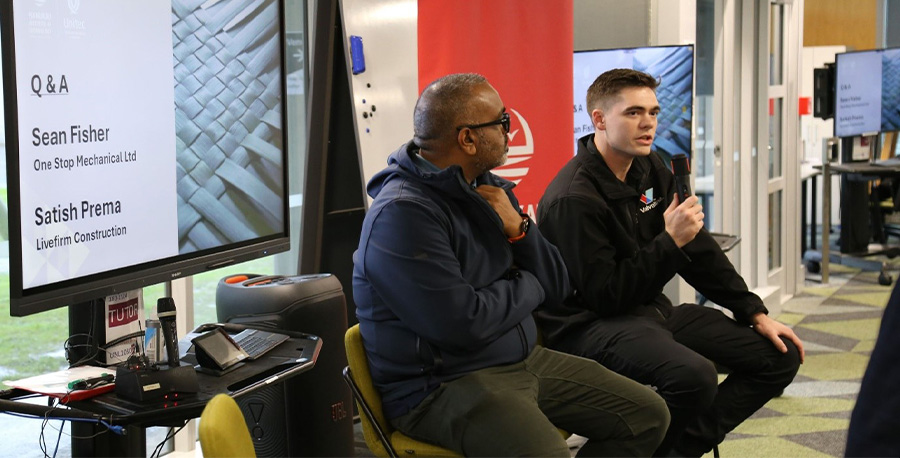
Industry leaders who started their careers training with us, returned to campus to share insights on how together we can support high quality apprenticeship pathways for the next generation of talent.
Sean Fisher of One Stop Mechanical and Satish Prema of Livefirm Construction spoke about their experience as apprentices with Unitec and how they have come ‘full circle’ as employers supporting the progress of trainees.
“At that age, you are in between deciding whether you carry on with the apprenticeship or go do something else or muck around for the rest of your life,” Mr Prema says.
“The mentorship that I got from my lecturers at that time was really good to keep me to stay focused and driven towards this career I’m in. From that Level 4, building houses or whatever else, it was really rewarding.”
Mr Fisher talked about the importance of being on campus in reflecting on his time as an apprentice.
“I struggled to come in with work and everything else, but I got a lot of value out of being in class. With my apprentices now, I tell them to go into Unitec. There’s a lot of value to coming in and having a lecturer in front of you. You can ask questions and talk to the other apprentices.”
The employers contributed to a panel discussion moderated by Head of School, Trades & Services Lee Baglow, part of the Apprenticeships That Work Breakfast held at Mt Albert Campus on Tuesday 24 June, 2026.
The event was opened by new MIT and Unitec Chief Executive Professor Christina Hong who told attendees the newly independent, unified organisation is now the largest provider of on campus applied education and vocational training in the country.
Prof Hong says the newly combined institution she leads has a clear mandate to work closely with industry in aligning its services and qualifications to the needs of employers.
“We will open discussions as to how we can use our new scale and capability to support the growth of your people, our people as well as beyond that – our regional economy and Aotearoa – New Zealand.
MIT and Unitec employs 1300 staff who teach and support around 20,000 learners across six regional campuses.
“We need to be integrated so that you (employers) are informing how we work in terms of our content and how we engage with our learners as we move forward. Since I became CE in mid-April I’ve been looking at what we need to fulfil this brief.”
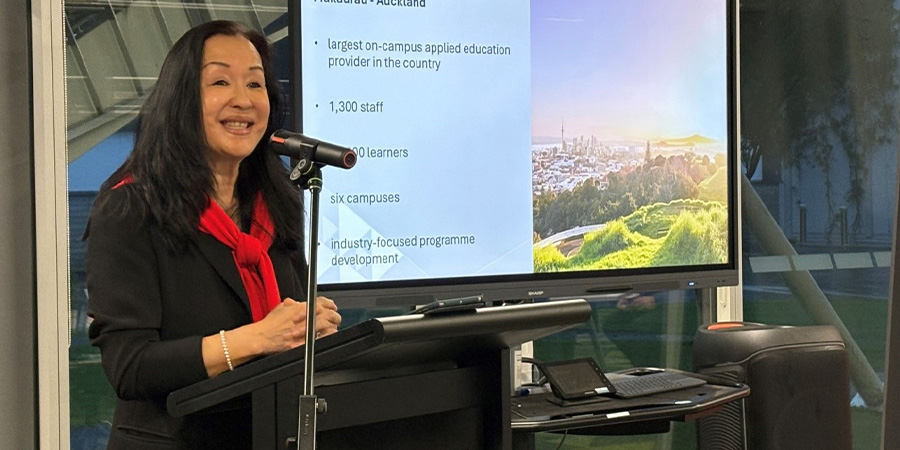
Chief Executive Professor Christina Hong welcoming the audience.
The organisation’s programme advisory committees are being re-established to provide industry input into the development of qualifications.
Prof Hong emphasised MIT and Unitec provides a full-service training system with multiple touchpoints which can take a learner from high school via the trades academy scheme to tertiary training either on campus or in a workplace-based apprenticeship to full qualification and further learning for site supervisor roles and business management.
“Currently we run the largest tertiary-based trades academy in the country. You’ll note that in the Government’s Budget, there was a doubling of trades places. We currently provide more than one thousand places at Manukau and Ōtara for students at local high schools.
“Those at central and west Auckland are accessing the initiative through the Pathways College here at Owairaka- Mt Albert.
“We are set to significantly broaden the level of engagement in that scheme as a single organisation.”
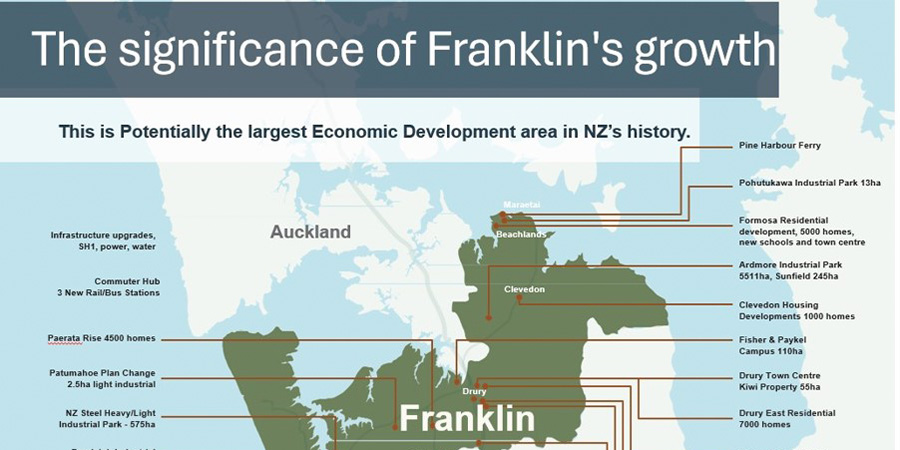
Growing areas like Franklin in southern Auckland will require skilled workers.
Kiwi Property is currently constructing a major 7000 dwelling development, including a town centre, in southern Auckland.
With new train stations opening soon as well as major commercial and residential developments underway, Kiwi Property’s Rod Cunningham’s told the audience 30,000 new homes will be built in the area over the next twenty-to-thirty years.
“Where are the trained people going to come from? Who’s going to build the houses? Who’s going to build the roads? Who’s going to service the vehicles, the heavy machinery required to make it all happen?” Mr Cunningham asked the audience.
“There’s a risk that we won’t have enough people with the skill levels and the confidence from employers to take those people on to be able to meet the demand in the future.
It’s a privilege to stand in front of you guys who are out there doing it and employing those young people, because I can guarantee there’s a lot of opportunity coming just in the area I know, let alone the rest of Auckland.
“So what we’re going to do is turn some lights on and get the economy going and there’s going to be plenty of demand in the future.”
“Good luck and make it all happen because we need you,” was Mr Cunningham’s message to the educators and employers present.
Motor Trades Association represents more than 40,000 members nationwide from across the automotive industries.
Sean Stevens, the association’s Membership Services Manager, says the main issues facing members include increased living costs, labour shortages, changing technology and customer expectations.
As the average age of members is 58, many are also looking at succession planning for their businesses, with training apprentices offering a potential solution.
“That’s the opportunity to hand over the business,” says Mr Stevens.
“You’ve got someone stable (in an apprentice) who understands the business, understand the customers and they can just offer that continuity.
“It gives an opportunity for someone who is young and eager and willing to put in the hard work to make it happen,” he says.
Training providers can also play an important role in bridging the generation gap, preparing young people for the workforce and helping employers better understand their apprentices.
MIT and Unitec offers pre-apprenticeships, managed apprenticeships and post-apprenticeship professional development in a range of vocations across its campuses.
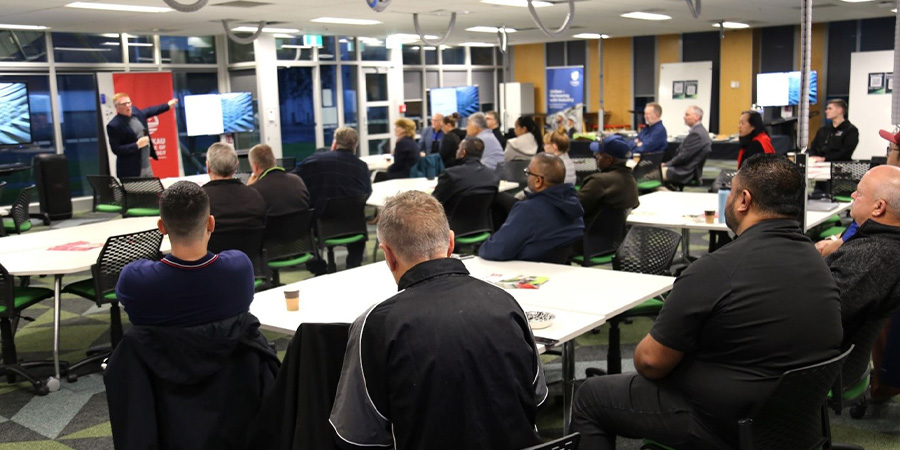
The audience included kaimahi (staff) from across the region.


