Computing students use tech skills to boost education access for local communities

Unitec Bachelor of Computing students have built a website which is helping to break down barriers to education by making essential school items more affordable for families across Aotearoa.
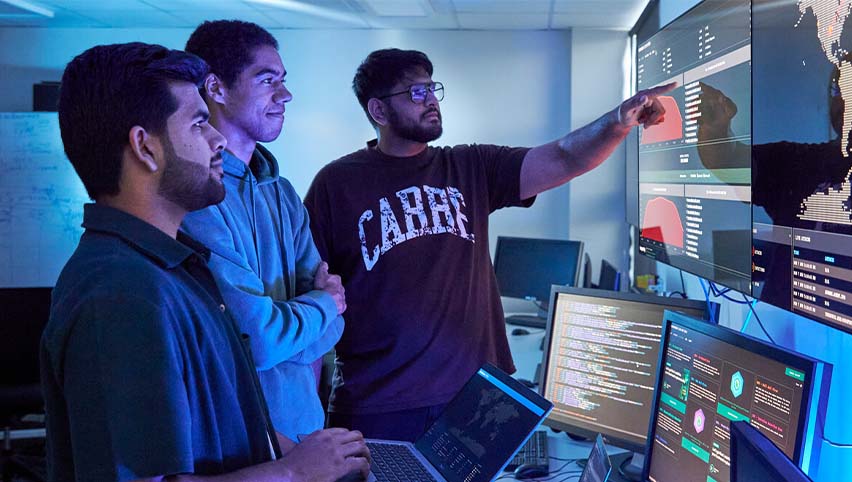
The NZ School Hive Marketplace website was coded by ākonga Arishay Reddy, Quinton Gillanders and Krijesh Karki as their Capstone Project.
The website allows people to buy or sell good quality second-hand uniforms, shoes and school items.
The initiative was developed by the Community Builders NZ Trust and Ōtara Youth Hub with support from the Spark Foundation and Unitec.
The website was launched at the Ōtara Music and Arts Centre on 10 November attended by students and kaimahi from the School of Computing, Electrical and Applied Technology, community leaders, families and rangatahi (young people) from south Auckland.
“Growing up in New Zealand, I experienced hardship myself, so I connected pretty well to this project,” says Arishay, who is proudly Fijian.
Krijesh also related to the struggles families face as an immigrant from Nepal.
“The average cost of sending a child to school in New Zealand is around $470 so for families with more than one child this was a real financial burden. The website gives them more affordable options,” he says.
“This project really connected with me because I saw how expensive school essentials can be, so being part of something that genuinely makes it easier for people feels meaningful and personal.”
The website launch was covered extensively in the media which put a spotlight on Unitec’s collaboration with industry and our communities.
Senior Lecturer, Masoud Shakiba says this opportunity came about through the school’s commitment to industry engagement and community partnership.
“In my role as both the Capstone Project Coordinator and Industry Champion for the School, I actively seek out a wide range of potential project opportunities. Twice a year, I issue an open call for project proposals through various channels,” he explains.
“After reviewing submissions, I invite selected project sponsors to present their ideas to our students. From there, I support students in forming teams, engaging with sponsors, and developing solutions under the guidance of an academic supervisor.”
Dr Shakiba says Ōtara Youth approached Unitec with their project proposal in July 2025 following a trip to Turkey where their idea won an award at a global youth summit. They were then invited to present their proposal to final year degree students at the start of Semester Two.
“Our goal is not only to add value to New Zealand businesses, start-ups, and community organisations, but also to ensure our students gain meaningful, real-world experience,” Masoud says.
“Through these collaborations, students strengthen their technical capabilities while also developing essential soft skills such as teamwork, communication, and leadership.”
Our ākonga enthusiastically took up the opportunity with Dr Lei Song serving as their academic supervisor, providing ongoing technical and academic support throughout the project.
“I am genuinely proud of their achievements and greatly appreciate the high quality of their capstone project. At the beginning of the term, they approached me regarding the School Hive project, and I was immediately impressed by their attitude and motivation,” says Dr Song.
“Although I am their supervisor, our working relationship has been very collaborative and supportive—more like colleagues working toward a shared goal. Each week, I provided guidance on what needed to be completed and offered a few tips, and they consistently demonstrated their ability to independently resolve all technical challenges.”
According to Dr Song, the students demonstrated exceptional dedication and professionalism throughout the project which reflected their significant potential as emerging professionals in the field.
“They established a clear and well-structured framework very quickly, and they consistently exceeded their sponsor’s expectations. They effectively applied the knowledge they gained from web development and cloud deployment.”
According to the students, they hope to create more awareness for the website because of the social and environmental benefits it brings for local communities through recycling and reducing waste and encouraging sustainable habits.
The website also aims to strengthen community connections and digital inclusion, which ultimately contributes to more equitable and eco-friendly school environments.
They also learned a lot from the project.
“The thing I learned was how to manage a project such as the business requirements which was harder than the actual coding,” shares Arishay.
So far customer feedback has been positive.
Manukau Ward Councillor Lotu Fuli said the project was a powerful example of grassroots innovation.
Tangaroa College board member, Karl Tusini-Rex, pledged his school’s support for the website which he says is a practical response to families’ financial pressure.
The team will use this feedback to refine and improve the website’s functionality, accessibility and responsiveness. Among the modifications they plan to do is making it more user-friendly for mobile phone users and improving the security features.
“The main goal of the site in the next few months is to really get it out there to more people so they can start to use it more. I expect to see in about a year or so from now for it to be used more often and have a lot of new users,” says Quinton.