Alumna’s award-winning debut inspires the next generation of filmmakers
In brief:
- 2014 Bachelor of Performing and Screen Arts alumna Paloma Schneideman has earned global recognition with her debut feature Big Girls Don’t Cry, which premiered at Sundance earlier this year and has since won the Grand Prix at the Biarritz Film Festival and opened the 2026 New Zealand International Film Festival last week.
- Schneideman says our Screen Arts programme’s hands-on approach, expert mentors and emphasis on understanding every aspect of filmmaking gave her the skills, confidence and discipline to build a successful career in the screen industry.
- One of our current first year BPSA acting students Ani Palmer plays the lead role Sid, and has earned widespread praise for her performance.
For award-winning alumna writer and director Paloma Schneideman, the journey to international film success began not on the red carpet, but in the classrooms, editing suites and film studios of our Mt Albert Campus.
Since graduating with a Bachelor of Performing and Screen Arts in 2014, Schneideman has emerged as one of Aotearoa New Zealand’s most exciting filmmaking voices.
Her graduation short film Mine, earned a nomination for Best International Short Film at the Inspiring Asia Micro Film Festival in 2015. Her later works, Memory Foam (2019) and Gate Crash (2023), were both selected for the New Zealand International Film Festival.
In 2022, Schneideman was chosen for A Wave in the Ocean, an intensive filmmaking programme led by eminent Kiwi filmmakers Jane Campion and Philippa Campbell, where she was encouraged to develop Big Girls Don’t Cry from a short film into a feature-length debut, with Campion later joining the project as executive producer.
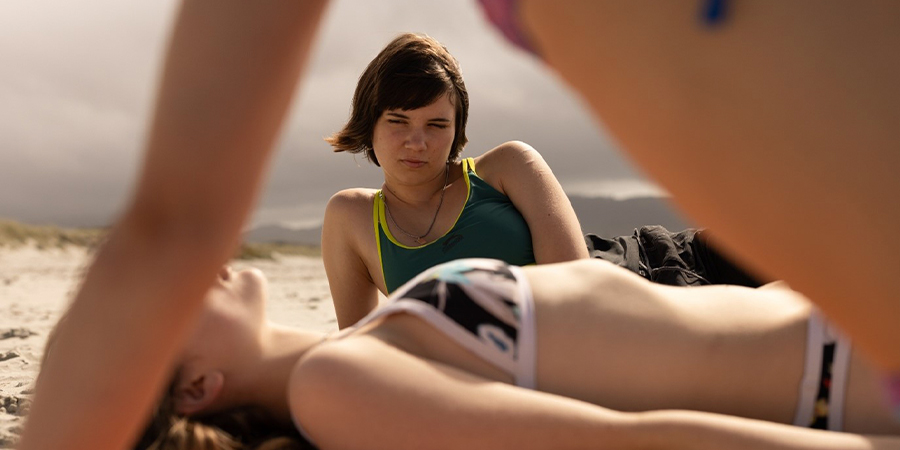
Publicity shot for Big Girls Don’t Cry (credit Jen Raoult).
Set in the small coastal town of Ōmaha north of Auckland, this coming-of-age story sees 14-year-old Sid (played by current first year BPSA acting ākonga Ani Palmer) tentatively traverse insecurity, identity and desire during the summer of 2006.
Big Girls Don’t Cry has earned international acclaim since its premier release at Sundance earlier this year, winning the Grand Prix at the Biarritz Film Festival and then opening the 2026 New Zealand International Film Festival in Tāmaki Makaurau Auckland last week.
She has simultaneously carved out an impressive career as a musician and music producer under the name PollyHill. Often collaborating with close friend and fellow alumna Shaqi Wasasala, who is an acclaimed DJ known as Half Queen. In 2023, Schneideman was named one of Rolling Stone AU/NZ’s ‘Eight Kiwi Artists Tipped to Take Over’.
Looking back, Schneideman says her time studying with us was instrumental in launching her filmmaking career, providing the practical skills, creative confidence and mentorship that continue to shape her work today.
Paloma reflects on her journey, the lessons she’s learned, and offers advice to our current ākonga ‘learners’, who are the next generation of filmmakers and storytellers.
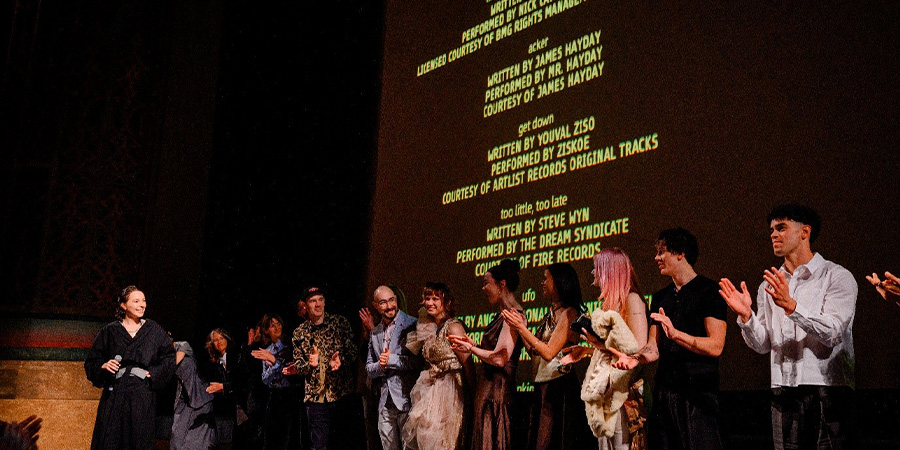
Paloma with some of the cast & crew members of her debut feature. <span data-teams="true">(credit Jinki Cambronero)</span>
Q&A with alumna filmmaker Paloma Schneideman.
Q. Congratulations on the incredible success of Big Girls Don’t Cry. Looking back, how did your time studying at Unitec help shape you as a writer and director?
I think the greatest impact was just making work, practicing craft, and working with great mentors. I very much see writing and directing as an art form, and would describe myself as an artist, but having Unitec and lecturers keeping me accountable to deliver and push myself, that’s part of the practice that’s allowed me to make this thing my career and add a little more structure to the art. I also met my best friend forever Shaq Wasasala there, that’s been one of the most impactful life changing events of my life.
Q. Tell us a little about yourself, where you’re from, where your love for making films started, and why you chose to study at Unitec?
I spent most of my childhood through to adolescence in Matakana, the sleepy farm town, before it was developed into this very desirable holiday destination. For the most part I was just a rural kid with not much to do, but in 2007 the Matakana Cinemas was built, and I got my first job there when I was 15. That’s when my life changed, I consumed so much art house film, there’s where I fell in love with storytelling. I tried to be a lawyer after high school, so enrolled to study at Victoria University Pōneke, but dropped out after a year as I was pretty useless. I wanted to tell my own stories, whereas with law, I feel like you can’t twist the narrative too much, it’s all fact based. So in 2012 I moved back to Tāmaki. I was drawn to Unitec because it seemed like a great balance of practice and theory, it made filmmaking seem fun and accessible. All my friends were doing the dance degree there and seemed to be having a great time, so it felt like a natural fit.
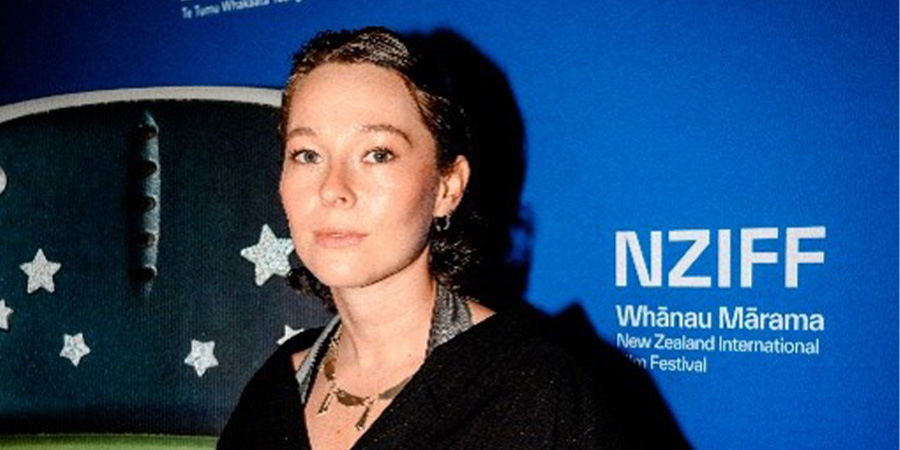
Paloma Schneideman on opening night of the NZ International Film Festival (credit Jinki Cambronero).
Q. Since graduating in 2014, you’ve built an impressive career in short films and enjoyed success on the local and international film festival circuit before making your feature debut. What were some of the most valuable lessons or experiences from Unitec that you’ve carried with you throughout your filmmaking journey?
Unitec was great for giving me a base level understanding of all elements of filmmaking, not just the writing and directing, but knowing how to use a camera or how to edit – these expanded my craft or allowed me to articulate my vision more clearly – so I would say the importance placed on knowing ALL departments of filmmaking, not just your own, was super helpful in the work I’ve made, even just with how I interact with my collaborators.
Q. Your films have earned international recognition and praise for their storytelling. Where do you find inspiration for the stories you tell, and what draws you to the themes you explore as a filmmaker?
I think I always have to start from personal experience – a feeling, a memory burnt in my brain, a tiny detail that tells a whole story. I’m less plot-driven and more feeling driven. I’ve always been drawn to female, queer, or diasporic stories, dysfunctional families, the comedy in the tragedy. Those are the types of stories that always helped me understand myself, and now I feel like I want to give that same gift back to audiences. Beyond that, my inspiration is often from my friends, who are my favourite artists in the country, as well as the greatest people I know.
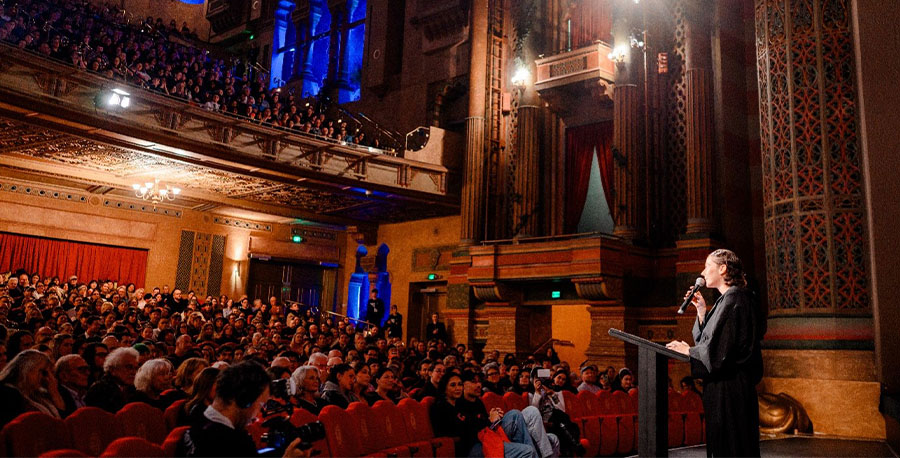
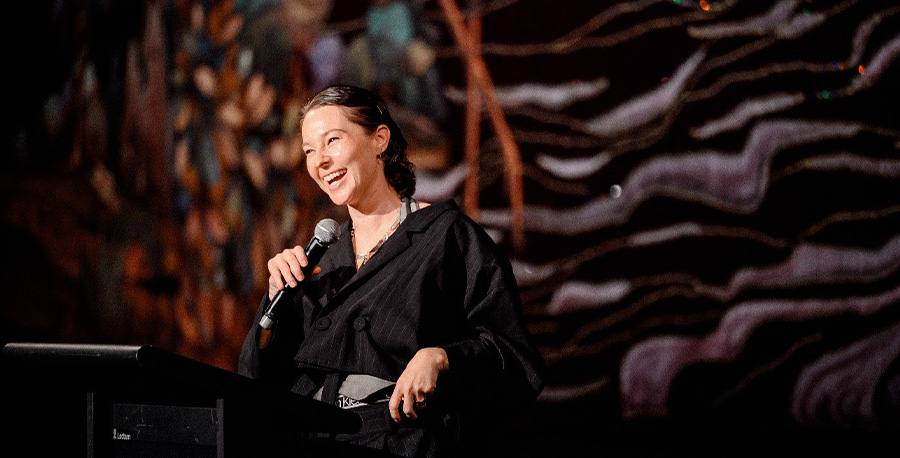
Paloma speaks at the opening of the NZIFF 2026 following the screening of her debut feature Big Girls Don’t Cry. <span data-teams="true">(credit Jinki Cambronero)</span>
Q. Big Girls Don’t Cry won the Grand Prix at the recent Biarritz Film Festival and praise from Jury President and actor Kristen Stewart. The film also opened the 2026 New Zealand International Film Festival (NZIFF) in Tāmaki Makaurau on 29 July. What do these milestones mean to you, and what have you learned from bringing your first feature film to the screen?
It was just really beautiful validation, that the film connects with people outside of myself. That’s all you can really hope for when offering up your art, that people see themselves in it. That was a really affirming and beautiful moment with Kristen Stewart and that even though her coming of age story might have looked different, the feelings are the same around the world. Opening the NZIFF was literally a dream come true – I told Shaq back in 2014 during Beasts of the Southern wild, Opening Night of NZIFF, that I wanted to do the same and open the festival at the Civic with my first feature. I believe in the power of manifestation and speaking things into existence. Beyond that, showing the film around the world has been a dream, but showing it to my community and my people it was made for and by, that’s the big one, that’s everything.
Q. The screen industry is highly competitive. What advice would you give to our current students who aspire to become writers, directors or filmmakers, particularly when they’re just starting out?
Try everything, shoot your shot – I was rejected so many times before the doors started opening – every NO took me to a better YES, even when I couldn’t see that at the time. And break the rules! Just because something is done the same way for a long time doesn’t mean you shouldn’t try and bring your own free fresh perspective to the systems that be.
Q. What excites you most about the future of New Zealand filmmaking, and what would you say to encourage the next generation of storytellers studying at Unitec today?
I think we’re in an amazing position with so many exciting new voices emerging, and a film commission that believes in these voices. It feels slightly more risk taking than historically it has been? It’s a great time to put yourself out there and tell stories we haven’t seen before – we need stories we haven’t seen before. AND DON’T BE LAZY. Don’t fall for the instant gratification and quick turnaround regime social media and the internet has implanted in us – don’t use AI to write your apps, know your story in your bones, and work your ass off to tell it.
NZIFF screenings of Big Girls Don’t Cry on 29 July and 31 July were both sold out. The film officially releases in New Zealand cinemas nationwide on October 8, 2026.
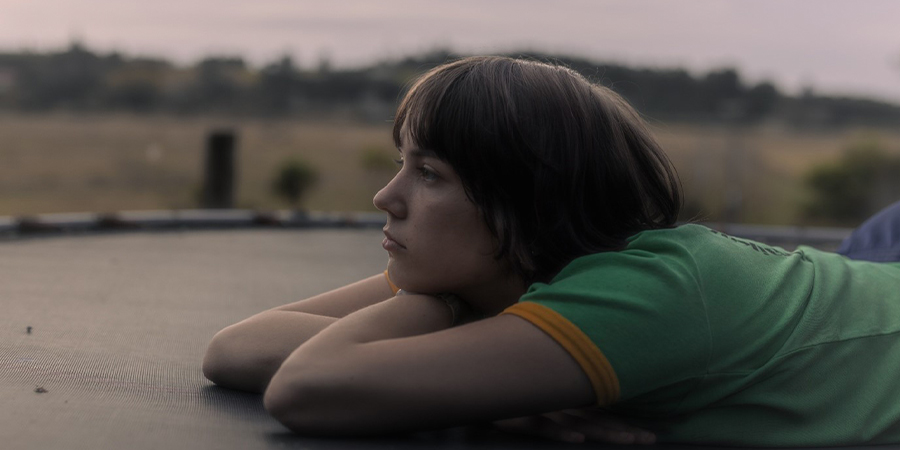
A still from ‘Big Girls Don’t Cry’ (credit: Jen Raoult)


