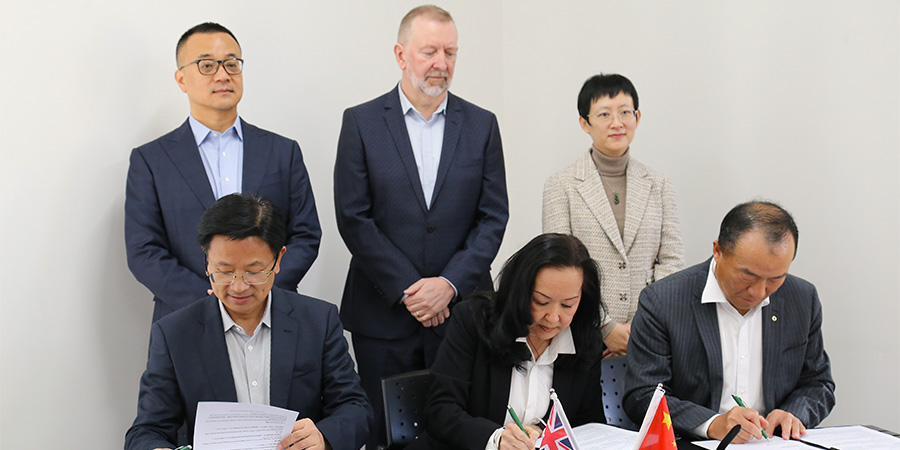
Agreement creates pathway for furthering sustainable construction research

In Brief:
- MIT and Unitec has signed an MOU with China Building Technique Group Co. Ltd and China Construction Bank New Zealand
- The partnership will focus on key sustainability priorities including low-carbon construction, resilient infrastructure, healthy buildings, climate adaptation, sustainable urban development and digital construction technologies
- The agreement strengthens international research connections, creating opportunities for staff and students to collaborate with one of China’s largest built-environment research organisations on projects with real-world impact
Our organisation has signed a strategic accord with two leading Chinese organisations, which will create new opportunities for sustainable construction research, innovation and postgraduate collaboration.
The tripartite memorandum of understanding (MOU) was agreed by MIT and Unitec, China Building Technique Group Co. Ltd (CBTGC) and China Construction Bank New Zealand (CCBNZ).
CBTGC is China’s largest built environment research organisation and brings significant global expertise.
More than 10,000 researchers work across its specialised institutes, developing many technical standards used in China’s country’s construction codes.
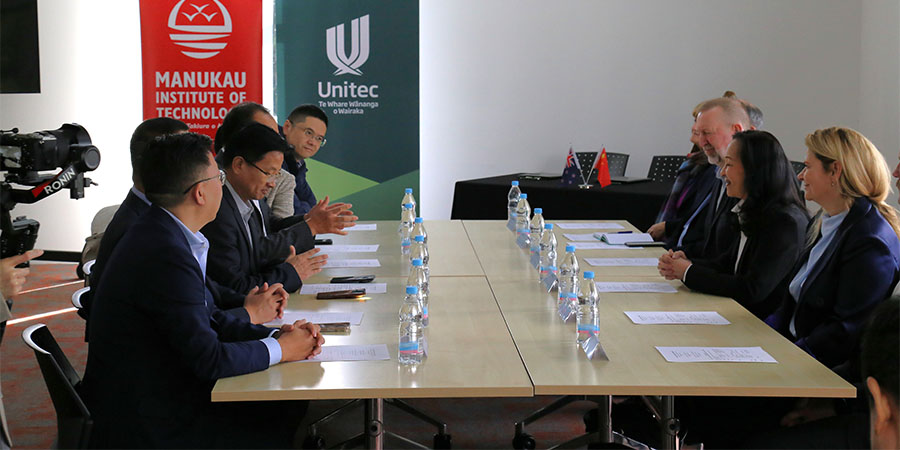
CCBNZ will support the partnership as a financial services partner, helping facilitate opportunities promoting sustainable and green building initiatives across Aotearoa New Zealand.
“The MOU represents an important step in expanding our organisation’s international research networks while creating meaningful opportunities for our kaimahi (staff) and postgraduate ākonga (students),” says MIT and Unitec Chief Executive Professor Christina Hong.
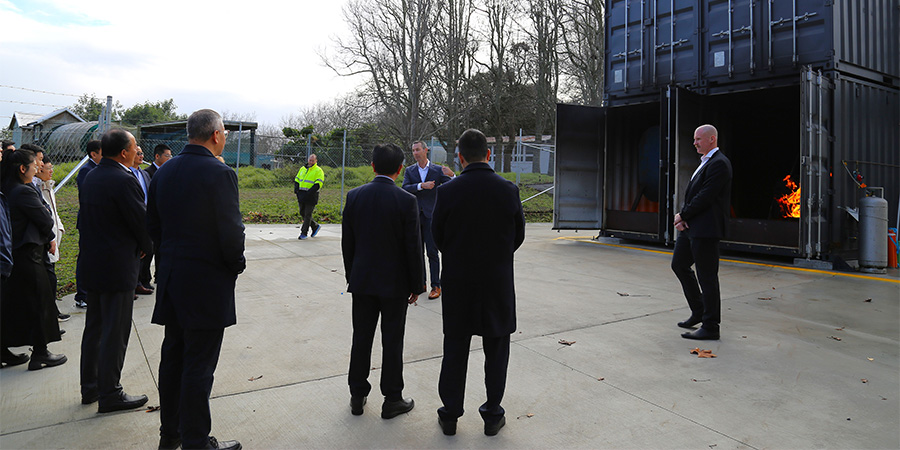
The collaboration will focus on areas that align closely with our applied research strengths and New Zealand’s sustainability priorities, including:
- sustainable building materials
- low-carbon and circular construction systems
- healthy homes and buildings
- modular construction
- resilient infrastructure
- indoor environmental quality
- energy-efficient building design
- climate adaptation
- sustainable urban development
- digital technologies for construction
- & building management
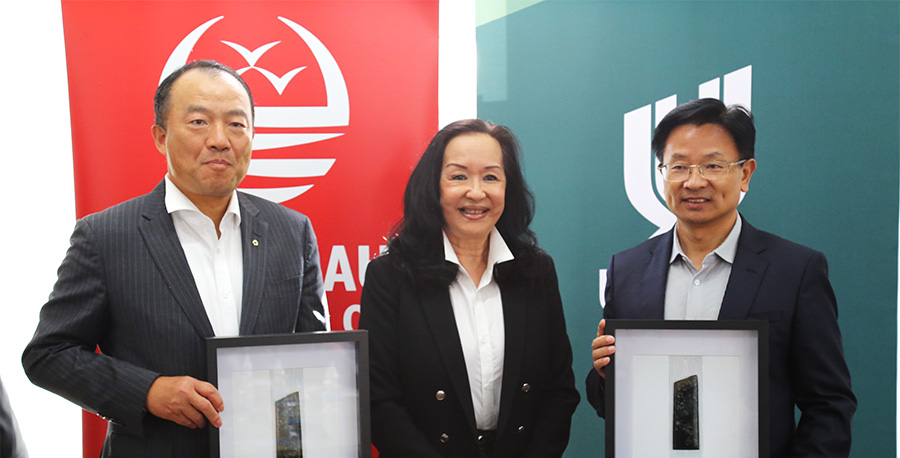
A senior delegation from CBTGC, led by Chairman Yu Xiangbei, travelled to Auckland for the signing ceremony on Thursday.
During the visit, shared areas of interest were discussed with senior academics in Schools of Building Construction and Architecture.
The delegates also toured specialist teaching and research facilities at our Mt Albert Campus.
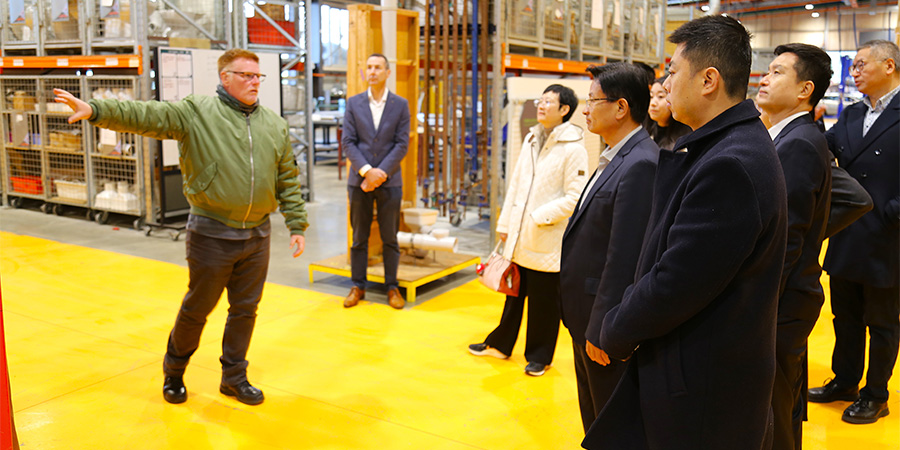
The previous evening, an executive event was run by CCBNZ, where the work our kaimahi do to increase environmental sustainability in industry was highlighted.
“The sharing from that event I am sure will lead to more fruitful exchanges,” Prof Hong says.
“I look forward to this important strategic relationship with CBTGC and CCBNZ flourishing, bringing mutual benefit once partnership arrangements are further defined and initiatives commence.”
In response, Chairman Yu described the two-day visit as a success, saying the campus tour and discussions had given the group considerable inspiration.
Director Research and Enterprise Rosanne Ellis says the MOU presents significant partnership opportunities.
“What emerged strongly from our discussions was a shared commitment to developing more efficient, resilient and sustainable construction sectors in both New Zealand and China,” says Dr Ellis.
The agreement reinforces MIT and Unitec’s commitment to international collaboration that delivers real-world impact, connecting our researchers and ākonga with leading organisations to tackle global challenges.