Bringing learning to life
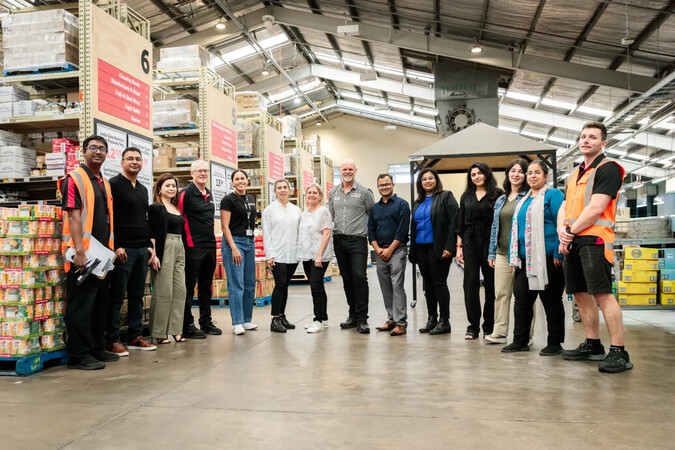
Over the past few years, many of Unitec’s Master of Applied Business (MAB) and Bachelor of Business (BBS) students have completed their internships or Industry-Based Learning (IBL) placements with Gilmours, one of New Zealand’s leading wholesale food and beverage suppliers.
The work-based experience blends academic learning with industry practice, providing students with skills that are directly relevant to the sector.
A number of students have progressed to secure full-time employment either with Gilmours directly, or within the wider sector, bringing a host of fresh ideas, applied research and a pipeline of graduate talent to one of New Zealand’s most competitive industries.
Andrew Lister, Wholesale Member Engagement Manager at Foodstuffs North Island, and a graduate of Unitec’s Bachelor of Business, Accounting and Operations Management, has worked with the Master of Applied Business and Bachelor of Business programmes at Unitec for the past 20 years.
He says that Gilmours’ long-standing partnership with Unitec enables the organisation to play a meaningful, hands-on role in the future career trajectories of their students.
“We enjoy giving Unitec students the opportunity to work with us,” he says. “They’re practical thinkers, not afraid of getting their hands dirty and have the confidence to bring some of the learning from the classroom to the business.
“Having students on placement in the workforce allows them be part of a business and get real world experience,” he says. “The student often will use the project work and the host organisation as a reference for future employment, so it’s a win-win situation.
He says the interaction with different business units and leaders within those organisations allows students to demystify the workplace and provides them with the skills to be immediately productive.
“When I see graduates who’ve done internships or project-based work in real businesses and who understand the requirements of the workplace, I feel much more confident in making an offer of employment,” he says. “Grades are all well and good, but when you’re looking for a way to differentiate, you need more than that.”
The partnership opens the door for students to gain hands on experience and test their theory in a real-world environment. They can network with experts in the foodservice and FMCG industry, creating long-term connections.
“As a New Zealand owned and operated company, it’s important that we give back to our local communities and support the development of the next generation coming into the workforce,” says Andrew.
“For us, the partnership provides the opportunity to embrace new perspectives. Students look at our day-to-day operations through fresh eyes, challenging us to think outside the box.
“The foodservice industry is evolving rapidly, driven by technology, customer preferences, and sustainability demands. We need to ensure we’re working with key partners to attract and retain top talent within our business.”
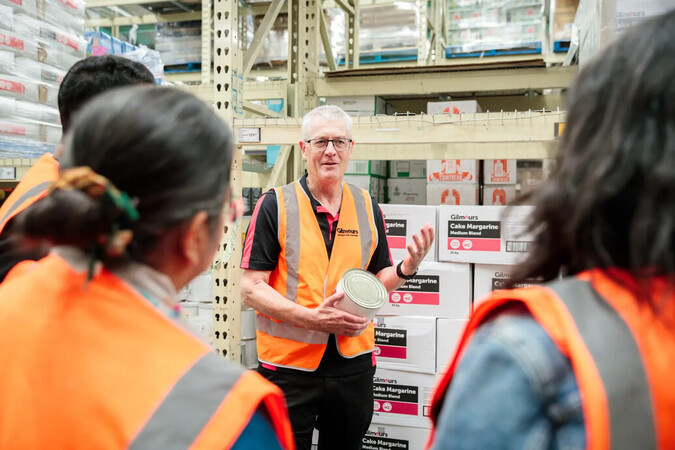
Classes closely linked with the real world
The school’s IBL programme is run by Sanjeev Vellore Ranganathan, senior lecturer in Management, and Craig Robertson, lecturer in Applied Business.
Craig also runs the Industry Advisory Committee, working closely with Sanjeev on internships for the BBS and MAB.
Sanjeev has been involved with the programme since 2018, drawing on his industry connections to find student internships and career opportunities.
“It takes a lot of skill and patience to work with both parties, learners and host organisations, to meet their respective needs. Sanjeev is very good at fulfilling all those needs,” says Malama Saifoloi, Academic Programme Manager, School of Applied Business.
Sanjeev’s teaching style balances the academic and the practical, using a mix of lectures, group projects, and one-on-one support.
“Sanjeev’s classes have always been very engaging and closely linked with the real world,” explains former student Ricky Dragland, now National Workshops & Reverse Logistics Manager at FujiFilm NZ.
Ma’ata Lavaki Ma’u, IBL student and 2023-2024 Student Representative at Chartered Accountants Australia and NZ, appreciates Sanjeev’s ability to deliver complex academic concepts alongside realistic workplace advice.
“His seminars taught me and my fellow students a lot about being professional and self-reliant in the workplace,” she explains.
Karan Sharma, WMS Trainer at Foodstuffs NZ, credits Sanjeev’s guidance for his career success.
Sanjeev introduced Karan to Gilmours, which led to an internship, a job opportunity, and, ultimately, Karan’s current role.
“His decision to introduce us to Gilmours not only expanded my horizons but also paved the way for me to secure a position at Foodstuffs,” Karan explains.
Karan is just one of many IBL students who have turned internship opportunities into career success.
“Many of our students secure employment from their placement – that’s a key success story,” adds Malama.
“Industry partnerships like Gilmours are essential for applied learning because they allow students to work on real‑world projects, challenges and business needs,” she says.
“They can then apply the theories and skills they learn in class to authentic industry situations.
“These partnerships also build students’ confidence, expose them to industry expectations, help them develop employability skills, and create pathways for future jobs or internships. By being part of real problem‑solving, students gain practical experience that can’t be replicated through learning solely in a classroom situation.
“It also brings more variety into their learning – it makes it active rather than always passive.”
Teaching staff at the School of Business collaborate with industry partners to ensure students meet their learning objectives, while at the same time delivering genuine value to the business.
They work together to co-design projects and problems, integrating industry insights into teaching, and set shared expectations at the start of the placement. They agree on the frequency of communication, open feedback loops and check in posts e.g. key milestones, providing specialist and customised support for students throughout the placement.
As well as monitoring and evaluating student performance, they also constantly review the partnership to ensure the outcomes are useful for the business, as well as for the learner.
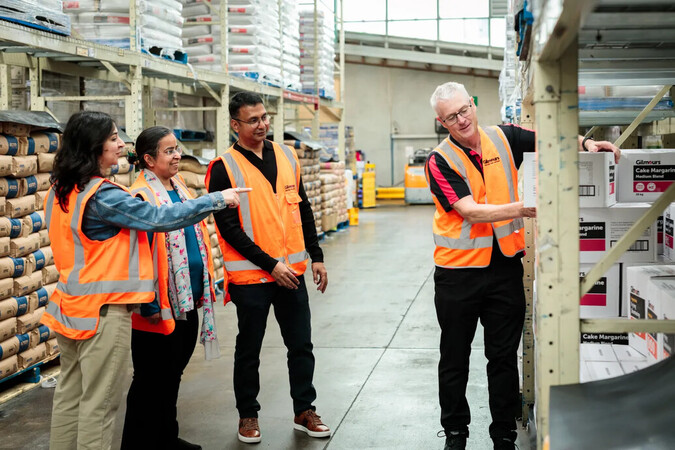
Top student project showcases practical solutions to real challenges
Ruwantha Fernando came to Unitec from Sri Lanka as an international student to do his master’s in applied business, armed with a wealth of hands-on experience in the fashion and logistics industries.
“Even though I had extensive product and business knowledge, and experience in supply chain management, I felt that a professional qualification would help enhance my career opportunities.
“I figured that an international education would allow me access to world-class facilities and industry insights that would further develop my knowledge. I chose New Zealand as a supply chain-driven country, and Unitec for its facilities and learning opportunities.”
Specialising in Supply Chain Management and Logistics, Ruwantha relished the programme’s real-world industry opportunities that allow students to work alongside leading retail businesses such as Gilmours.
Ruwantha led a student project that focused on the internal implications of a supply chain disruption at the company, proposing an inventory and rental solution to help leverage a new freezer facility. The group also explored employee resilience to strengthen internal processes and identify future leaders. The project, which received top marks, showcased how students develop practical solutions to real challenges while gaining valuable team and leadership experience.
“I enjoyed working with various groups of people from different nationalities and occupations, sharing knowledge and relating things learned from our professional work,” Ruwantha says.
He says one of the most fulfilling aspects of the course was seeing how what he learnt aligned with the daily tasks he’d been executing at work over the past 20 years.
“It makes sense of the actions and strategies that have supported me over the years but with more depth and conviction of the application through my studies.
“I really enjoy the structured course which allowed us to push our knowledge boundaries and present our work professionally,” he says. “I also enjoyed presenting my work to an audience of people from different professions. This required me to adapt my work to the technicality the subject demands and use simple, relatable terminology for everyone’s understanding.”

Partnership with Gilmours further strengthened with student awards
Last year, Unitec strengthened its ties with Gilmours by jointly launching an awards scheme to recognise students who have excelled in operations management, supply chain and logistics.
Initiated by the school’s Academic Programme Manager, Malama Saifoloi, the Gilmours’ awards programme is designed to encourage interest in careers in operations management, supply chain and logistics, and are open to Unitec students completing their final year of the BBS or MAB.
The Gilmour’s Top Bachelor of Business major in Operations Management Award and the Gilmours Top Master of Applied Business in Supply Chain & Logistics Award will be presented at a special ceremony at Unitec next month.


