Wāhine in Trades driving growth and supporting women in male-dominated industries
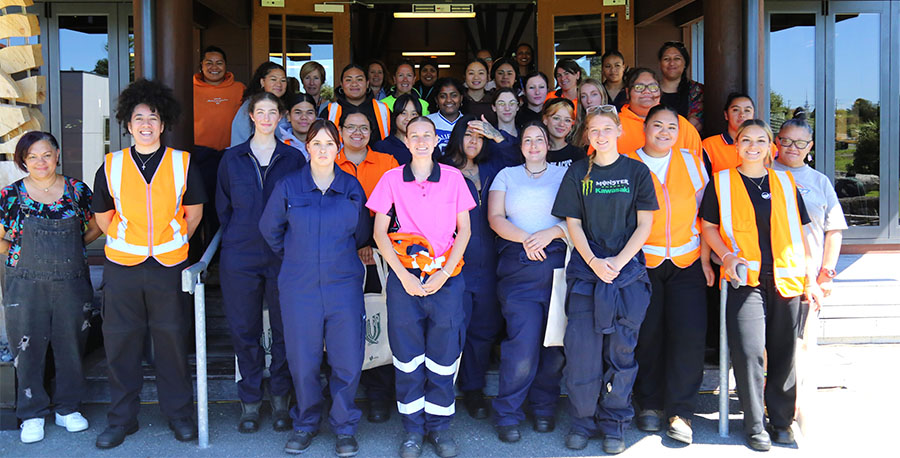
As the world prepares to mark International Women’s Day on Sunday, 8 March, an initiative designed to support women entering traditionally male-dominated industries is helping drive a steady rise in wāhine enrolling in our Trades programmes.
The Wāhine in Trades initiative, established in 2022 by former lecturer Svetlana Pencheva, was created to provide a supportive and empowering environment for women pursuing careers in the trades.
Guided by the values of Te Noho Kotahitanga, the programme continues to be championed by Head of School, Trades and Services, Lee Baglow, alongside his team, Māia, the Marae team, and our wider learner support service teams.
Together they provide tailored guidance, advice, and practical support designed to help our wāhine ākonga (female students) succeed in their vocational pathways.
According to Kaihautu Mātauranga Māori, Veraneeca Taiepa, the initiative focuses on fostering whānaungatanga—building strong connections and a shared sense of purpose among women studying across the School of Trades & Services.
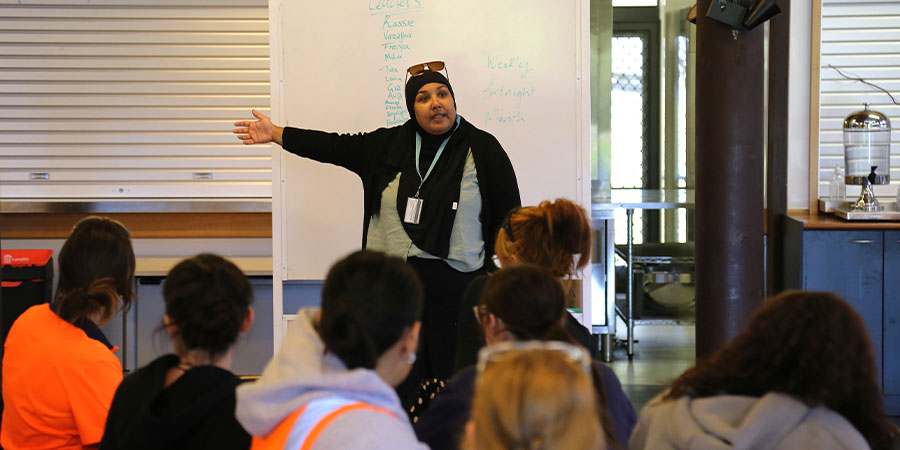
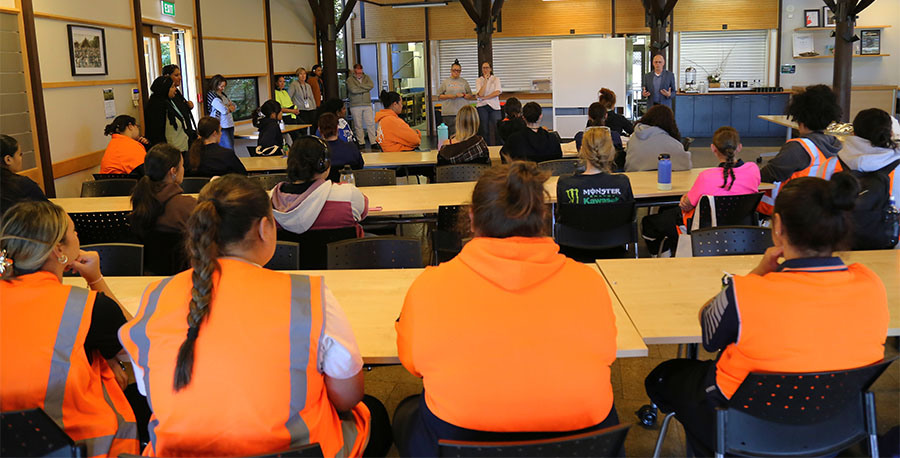
Speaking at Wāhine in Trades first hui for 2026 in the Wharekai (Manaaki) on Wednesday, Veraneeca says this year’s programme will have a renewed focus on connection and leadership.
“The kaupapa is really around whānaungatanga and building leadership. It’s about building self-confidence and self-esteem for women training in industries that are male dominated,” she explains.
Ms Taiepa says some learners can initially feel self-conscious about entering trades environments where women are still underrepresented.
“It’s not necessarily an issue in the classroom, but sometimes it’s an unspoken thing. This initiative creates a space where they can support each other.”
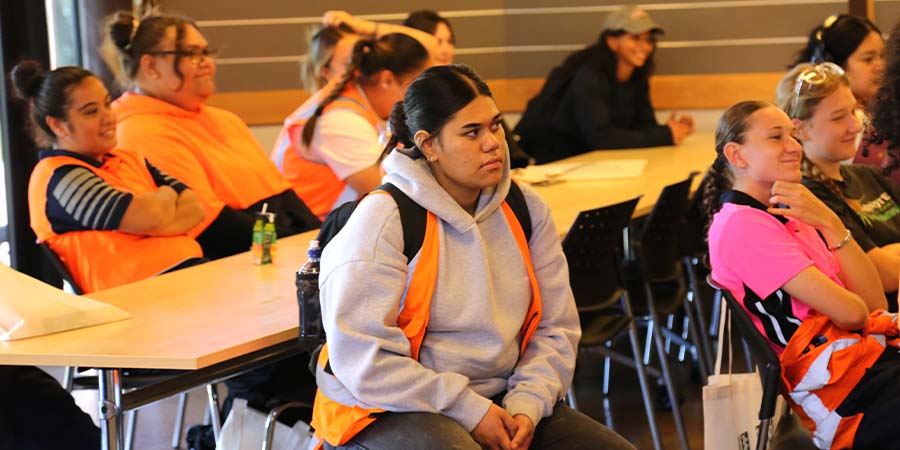
The programme is also designed to amplify learner voices. A student leadership rōpū (group) has been formed to help shape the initiative and identify what support wāhine need most.
“We’re taking a learner-leader approach,” says Taiepa.
“There’s a group of women who have volunteered to be part of the leadership rōpū, and they’re going to tell us what their needs are.”
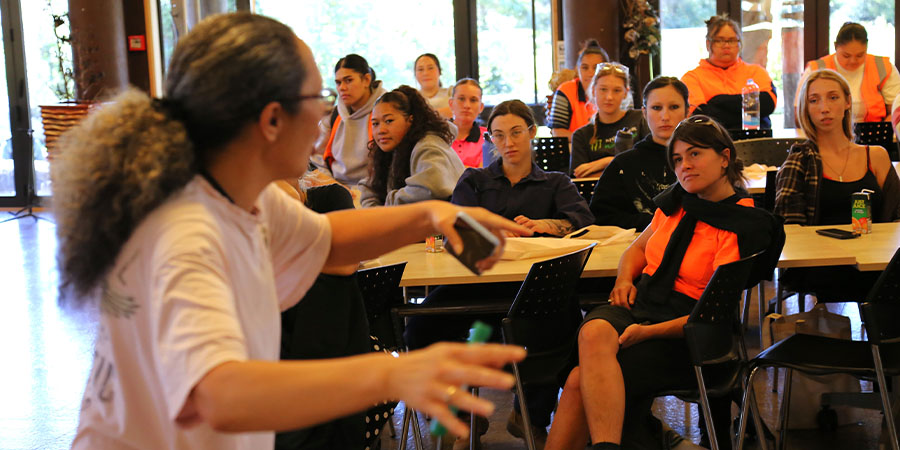
The group meets fortnightly, beginning gatherings at Te Noho Kotahitanga Marae and expanding to other spaces around campus, including collaborations with the library team to help raise awareness of support services.
“What we captured through the kaiako (teacher) voice is that a lot of the women didn’t know these services existed,” Taiepa says. “It’s about awareness and being able to go and use those services.”
The impact of initiatives like Wāhine in Trades is increasingly reflected in enrolment trends.
Academic Programme Manager Bryan Davis says the number of women entering our trades programmes has grown steadily in recent years.
“Over the last couple of years, we’ve seen a genuine increase in women coming into the School of Trades and Services,” Brian says.
“In 2024 it was about 10 percent. That rose to 14 percent last year, and this year we’re seeing even more, with close to a third of students being women in an average class.”
The School of Trades & Services currently has close to 600 students, with close to 400 new learners starting in Semester One this year.
Davis says providing a safe and supportive learning environment has been key to attracting more women into trades training.
“Survey responses consistently show that students feel safe and that the learning environment is well organised and highly practical. Those are two very important factors.”
Trades kaimahi (staff) have also been working closely with secondary schools to encourage more young people—particularly girls—to consider trades careers.
“We’ve been attending expos, visiting schools and bringing students onto campus so they feel more comfortable coming to Unitec,” Davis says.
“That’s made a massive impression, especially with young women.”
Bryan Davis believes there is also a growing shift in attitudes among parents.
“Parents are starting to look more closely at the best career path for their children, rather than focusing solely on a degree pathway. That’s helping create better conversations about vocational options.”
For students like Automotive learner Cassandra J. Pearson, the decision to study a trade came from a lifelong interest.
“I’ve always liked cars and pulling stuff apart, so I thought I’d give it a go,” Cassandra says.
After leaving high school at 16, the 27-year-old says the timing now felt right to pursue automotive training.
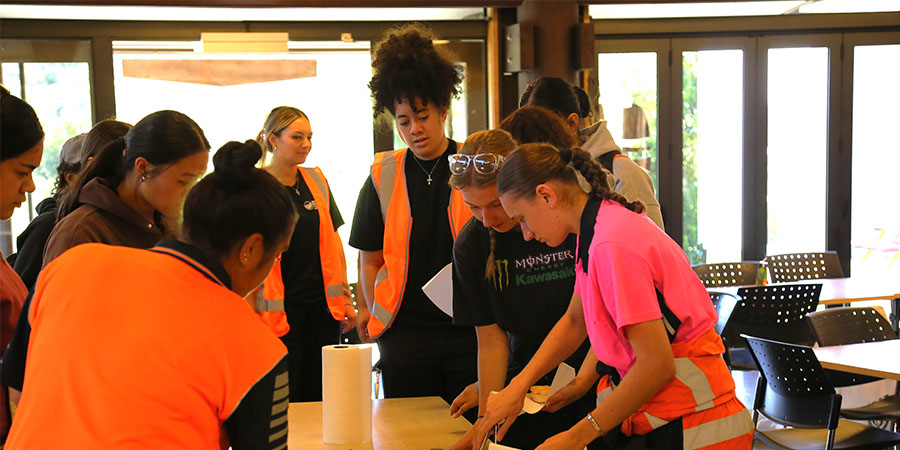
Level 3 Carpentry student Stella Morris, 17, says her decision was inspired by family history.
“Building has always been in my family,” Stella says.
“My grandma would tell me stories about how her dad and his dad were carpenters, and she wanted to see a woman in our family become one. So I stepped up.”
Morris says being one of the few women in her class hasn’t been a barrier.
“I don’t really notice it. All the boys are pretty chill—they don’t make an issue about it.”
Stella hopes to complete an apprenticeship and return to Unitec to continue her training at Level 4.
Looking ahead, Ms Taiepa says there is potential to extend the Wāhine in Trades initiative to other schools within the institute.
“Once we establish this one first, we’ll look at other schools if they want to run something similar.”
As more women choose vocational pathways, the programme is helping create stronger support networks and encouraging a new generation of wāhine to see the trades as a place where they belong.


