Unitec-led research projects aimed at improving Māori learner success secure funding
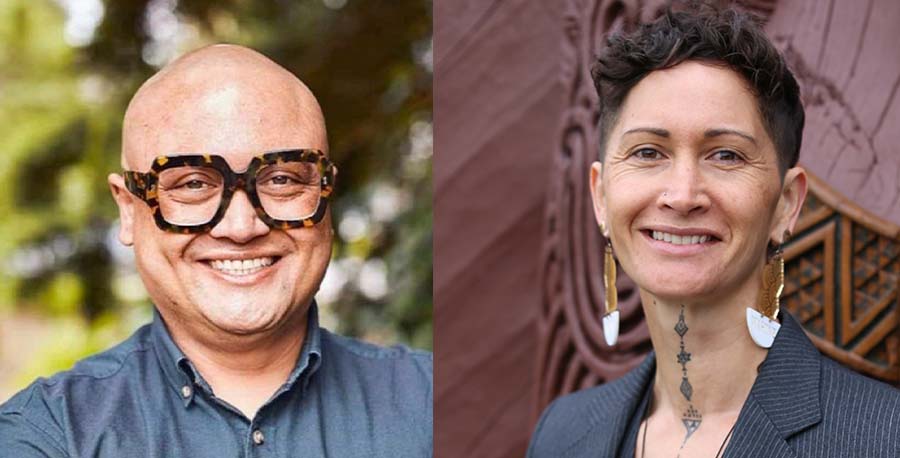
Associate Professor Deb Heke and Associate Professor Byron Rangiwai have been selected by the Teaching and Learning Research Initiative (TLRI) in their final round of educational research funding for this year.
Their research projects were among the nine projects that were greenlit for funding on 10 December.
Both will receive Kaupapa Māori research funded through the Whatua Tū Aka pathway.
Assoc. Prof. Heke, who is the Director for Ngā Wai a Te Tūī (Māori and Indigenous Research Centre), says the funding will support the delivery of Ngā Pou Māreikura, a kaupapa Māori research project which explores how the experience and embodiment of Oranga-tiratanga (sovereignty over their wellbeing) with kōhine Māori (young women) can inform pastoral and educational thriving at Hobsonville Point High School
“This project will transform their pastoral care systems and support culturally-grounded wānanga, collaboration with whānau and mana whenua, and the development of a framework that uplifts kōhine Māori wellbeing and success,” Assoc. Prof Heke explains.
Assoc. Prof. Heke leads a research team which includes partners: Jewelz Petley (Youth Development specialist) and Tracey-Leigh Te Paa (Kai Rongoā – Māreikura Rising), Nikki Penetito-Hemara (Kori Collab), Josie Hatch-Wall (Education Lead -Te Kawerau ā Maki), and Rosamund Britton (Deputy Principal Hobsonville Point Secondary School).
Her research is motivated by the systemic challenges Kōhine Māori face which impacts wellbeing and educational outcomes. This research responds to the school and mana whenua aspirations for culturally safe, empowering spaces where kōhine thrive as Māori.
“For Ngā Wai a Te Tūī, this funding strengthens our ability to lead Kaupapa Māori research that addresses systemic inequities and uplifts Māori learner success. It also contributes to our strategic goal of developing models that can be scaled across kura and communities,” she remarks.
Ngā Pou Māreikura will be carried out in 2026 with findings scheduled to be shared by March 2027.
Assoc. Prof. Rangiwai’s research, Māori Students with ADHD: Kaupapa Māori Research on Transitions into Tertiary Education looks at support for ākonga Māori with ADHD transitioning to tertiary education.
“Over one year, the project will survey at least 30 Māori students nationwide and conduct in-depth interviews with twelve students in Tāmaki Makaurau. Hui, wānanga, and interviews will explore learning experiences, systemic barriers, cultural identity, and support needs,” Assoc. Prof. Rangiwai explains.
The funding enables the first focused study in the world examining the transition experiences of Māori tertiary students with ADHD.
“For Ngā Wai a Te Tūī, it strengthens a growing research platform on neurodivergence and Māori education, expands partnerships across multiple institutions, and supports sustained engagement with tauira, marae, and tertiary support services,” says Assoc. Prof Rangiwai.
“The funding makes it possible to complete a national survey, undertake in-depth interviews, and work with institutional partners across the motu.”
Assoc. Prof. Rangiwai leads a team of co-investigators which include Assoc. Prof. Heke, Assoc. Prof. Dion Enari, Dr Ali Rasheed (Unitec) and Dr Maia Topp and Dr Mel Wong (Manukau Institute of Technology).
The advisory group to this project reflects significant disciplinary and institutional diversity from Australia and Aotearoa and includes: Whaea Lynda Toki and Pāpā Hohepa Renata from MAIA and Te Noho Kotahitanga Marae, and David Kukutai Jones, MIT.
“The motivation for this research comes from clear community aspirations for equitable ADHD recognition, culturally-aligned supports, and tertiary environments where neurodivergent Māori can succeed,” Assoc. Prof. Rangiwai adds.
“Insights from the 2024 national ADHD survey demonstrate the close link between identity, belonging, and ADHD for Māori, underscoring the need for Māori-led research that centres lived experience.”
Research will be carried out over twelve months until December 2026.
Since its inception in 2003, the TLRI has funded 210 high-quality research projects that aim to improve outcomes for learners. They are co-designed by educational researchers and teacher practitioners, addressing themes of strategic importance and improve outcomes for learners in Aotearoa New Zealand.
All projects are partnerships between researchers and educators. This year, the TLRI prioritised research that contributes to the Government’s education priorities, focuses on topics of strategic importance within the early childhood education, primary and/or secondary school sectors, and focuses on success for Māori learners as Māori and Pacific ākonga.
The TLRI is managed and administered by Rangahau Mātauranga o Aotearoa, the New Zealand Council for Educational Research (NZCER).
Funding for the TLRI will cease in mid-2027, making this the final round of funding to be awarded. All projects will be completed by March 2027.


